
| Best Overall | Best Decaf | Best Budget One-a-Day | |
|---|---|---|---|
| Pick | Micro Ingredients Extra Strength Green Tea Extract | Designs for Health EGCg | aSquared Nutrition Green Tea Extract |
| Why | 225 mg of EGCG per serving at the lowest cost per milligram of EGCG here, with batch testing stated on the listing. | 225 mg of EGCG in one capsule made from decaffeinated green tea, with the EGCG amount printed on the label. | 225 mg of EGCG in a single capsule for about 14 cents a day. |
| Cost per day | $ | $$$ | $ |
Quick answer: Of the green tea extract supplements we compared, Micro Ingredients Extra Strength Green Tea Extract is the best choice for most people: two capsules give 225 mg of EGCG, well below the level linked to liver stress, for about 9 cents a day. Designs for Health EGCg is the pick if you want to avoid caffeine, and aSquared Nutrition Green Tea Extract is the cheapest one-capsule option.
Green tea extract concentrates the catechins in green tea leaves, mainly EGCG (epigallocatechin gallate). Most people buy it for weight, energy or antioxidant support, but the research on weight loss is weak, and high doses of EGCG have been linked to liver injury. That makes the EGCG amount on the label the most important number to check.
Labels make that harder than it should be. Some list the extract weight and a percentage, some list EGCG in milligrams, and a few do not state EGCG at all. In this guide we worked out the EGCG per serving from each label so you can compare like with like.
We compared eight green tea extracts, capsules and one liquid, on EGCG per serving, caffeine, other ingredients, testing claims, cost per day and who sells the listing, plus recent FDA recalls, using our how we test criteria. Every product here made our shortlist, and our ratings show how they rank against each other. Where two products scored the same or very close, we explain the order in their reviews.
Our Top Picks
Best Overall: Micro Ingredients Extra Strength Green Tea Extract – CHECK PRICE →
Best Decaf: Designs for Health EGCg – CHECK PRICE →
Best Budget One-a-Day: aSquared Nutrition Green Tea Extract – CHECK PRICE →
Best Low Dose: Zazzee Extra Strength Green Tea 20:1 – CHECK PRICE →
Best Liquid: Drops of Nature Green Tea Extract – CHECK PRICE →
Comparison Table
| Rank | Product | Form | Per Serving | EGCG per Serving | Caffeine | Cost per Day | Best For |
|---|---|---|---|---|---|---|---|
| 1 | Micro Ingredients | Capsules | 2 capsules | 225 mg | Up to 22 mg | $ | Best Overall |
| 2 | Designs for Health | Capsule | 1 capsule | 225 mg | Decaffeinated | $$$ | Decaf |
| 3 | aSquared Nutrition | Capsule | 1 capsule | 225 mg | 15 mg | $ | Budget One-a-Day |
| 4 | Zhou Nutrition | Capsule | 1 capsule | 250 mg | Not stated | $ | Most Popular |
| 5 | Zazzee | Capsule | 1 capsule | 150 mg | Not stated | $ | Low Dose |
| 6 | Natures Craft | Capsule | 1 capsule | 225 mg | Up to 25 mg | $ | Small Bottle |
| 7 | Nature’s Nutrition | Capsules | 2 capsules | 450 mg | Not stated | $ | Highest Dose |
| 8 | Drops of Nature | Liquid | 2 mL | 125 mg | Not stated | $$$ | Liquid |
Cost tiers per day at the label serving: $ under $0.20 · $$ $0.20–$0.40 · $$$ over $0.40 (checked November 2026). EGCG is worked out from each label’s extract amount and stated EGCG percentage, or taken directly from the label where it lists EGCG in milligrams.
In-Depth Reviews: Top 8 Green Tea Extract Supplements of 2026
1. Micro Ingredients Extra Strength Green Tea Extract – Best Overall
Our rating: 4.8/5
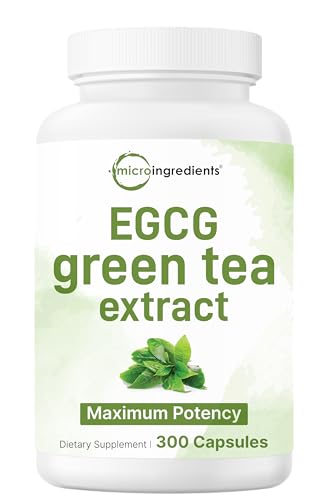
Cost per serving: $ | 150 servings | 2 capsules per serving
A moderate EGCG dose with the label stating EGCG in milligrams, at the lowest cost per milligram of EGCG here.
Quick Stats
- Active ingredient + form: Green tea leaf extract, 450 mg per serving, standardized to 441 mg polyphenols
- Dose per serving: 225 mg EGCG (2 capsules); up to 22 mg naturally occurring caffeine
- Dose vs. research: Well below the 800 mg a day that EFSA linked to raised liver enzymes
- Third-party tested: The listing says each batch goes through third-party lab tests but does not name the lab
- Certifications: Non-GMO (listing)
- Who should skip: People with liver disease, pregnant or breastfeeding women, and people taking nadolol, atorvastatin or raloxifene unless their doctor approves
What We Like
The label states 225 mg of EGCG per serving instead of only a percentage, which makes the dose easy to check. A 300-capsule bottle lasts five months and costs about 9 cents a day, the least per milligram of EGCG in this guide. The other ingredients are rice flour, magnesium stearate and silicon dioxide, and the brand’s parent company sells the listing.
Watch Out For
It contains a little caffeine, so it is not the best choice for evening use or caffeine-sensitive people. The buyer base is smaller than for most products here.
What Buyers Report
Buyers frequently mention good quality, value and gentle energy without jitters, and one notes the capsules are slightly smaller than usual.
Opinions on whether it works are mixed, and one buyer finds it causes dizziness on an empty stomach.
Bottom Line: A clearly labeled, moderate EGCG dose at the lowest cost per milligram here.
2. Designs for Health EGCg – Best Decaf
Our rating: 4.7/5

Cost per serving: $$$ | 60 servings | 1 capsule per serving
A one-capsule EGCG supplement made from decaffeinated green tea, from a practitioner brand.
Quick Stats
- Active ingredient + form: EGCG from decaffeinated green tea leaf extract
- Dose per serving: 225 mg EGCG (1 capsule)
- Dose vs. research: Well below the 800 mg a day that EFSA linked to raised liver enzymes
- Third-party tested: Not stated on the listing
- Certifications: Gluten-free, vegetarian (listing)
- Who should skip: People with liver disease, pregnant or breastfeeding women, and people taking nadolol, atorvastatin or raloxifene unless their doctor approves
What We Like
The label lists EGCG itself in milligrams, and the brand says it is derived from decaffeinated green tea, so it suits people who avoid caffeine. The only other ingredients are the cellulose capsule, microcrystalline cellulose and vegetable stearate, and the brand sells the listing. Zhou scored two points higher; Designs for Health ranks ahead because it is the decaffeinated option and states the exact EGCG amount on the label.
Watch Out For
At about 54 cents a day, it costs several times as much as most products here for a similar EGCG dose. One buyer received it in a plastic bottle rather than the glass bottle they expected.
What Buyers Report
Buyers frequently mention good quality and like that it is decaffeinated.
Many are unsure whether it works, and a few question the value.
Bottom Line: The pick if you want a clean, caffeine-free EGCG capsule and do not mind the price.
3. aSquared Nutrition Green Tea Extract – Best Budget One-a-Day
Our rating: 4.6/5

Cost per serving: $ | 180 servings | 1 capsule per serving
One 500 mg capsule with 225 mg of EGCG and a stated caffeine amount.
Quick Stats
- Active ingredient + form: Green tea 98% extract, standardized to at least 45% EGCG and 75% polyphenol catechins
- Dose per serving: 500 mg extract, about 225 mg EGCG (1 capsule); 15 mg caffeine
- Dose vs. research: Well below the 800 mg a day that EFSA linked to raised liver enzymes, even at the label maximum of 2 capsules
- Third-party tested: The listing says the formula is third-party tested but does not name the lab
- Certifications: Made in a GMP facility (brand claim)
- Who should skip: Vegetarians (bovine gelatin capsule); people with liver disease, pregnant or breastfeeding women, and people taking nadolol, atorvastatin or raloxifene unless their doctor approves
What We Like
One capsule a day gives about 225 mg of EGCG for about 14 cents, and the label states the caffeine, 15 mg per capsule, which few brands do. The label suggests taking it with meals. A 180-capsule bottle lasts six months at one a day, and the brand sells the listing. Zhou scored two points higher; aSquared ranks ahead because it costs less per day and states its caffeine content.
Watch Out For
The capsule is bovine gelatin. Some of the reviews come from buyers who received the product free.
What Buyers Report
Buyers frequently mention easy-to-swallow capsules and energy without jitters.
Weight results are split, and a few say it made no difference.
Bottom Line: The cheapest one-capsule way to get about 225 mg of EGCG, with caffeine clearly stated.
4. Zhou Nutrition Green Tea Extract – Most Popular
Our rating: 4.5/5
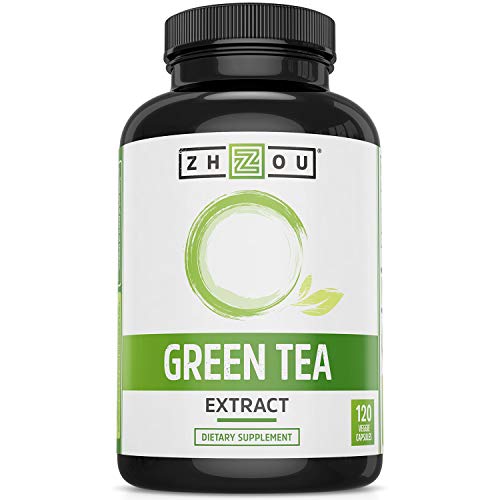
Cost per serving: $ | 120 servings | 1 capsule per serving
A 500 mg vegan capsule with the largest buyer base in this guide.
Quick Stats
- Active ingredient + form: Green tea leaf extract, standardized to 95% polyphenols and 50% EGCG
- Dose per serving: 500 mg extract, about 250 mg EGCG (1 capsule)
- Dose vs. research: Below the 800 mg a day that EFSA linked to raised liver enzymes; the listing suggests 1 to 2 capsules a day
- Third-party tested: The label shows a “lab verified” badge but does not name the lab
- Certifications: Non-GMO, gluten-free (label badges)
- Who should skip: People with liver disease, pregnant or breastfeeding women, and people taking nadolol, atorvastatin or raloxifene unless their doctor approves
What We Like
It gives 250 mg of EGCG per capsule in a vegan capsule with only rice flour and vegetable magnesium stearate added. It has more buyer reviews than any other green tea extract here, and the brand sells the listing.
Watch Out For
The label does not state the caffeine amount. At two capsules a day, the EGCG rises to about 500 mg. A noticeable minority of buyers report stomachaches or nausea.
What Buyers Report
Buyers frequently mention energy without jitters and that it is worth trying.
About three in ten buyers who mention side effects report stomach upset or nausea.
Bottom Line: A popular, simple vegan capsule; stick to one a day unless your doctor says otherwise.
5. Zazzee Extra Strength Green Tea 20:1 – Best Low Dose
Our rating: 4.4/5

Cost per serving: $ | 150 servings | 1 capsule per serving
A lower-dose vegan capsule that lasts five months.
Quick Stats
- Active ingredient + form: Green tea 20:1 leaf extract, standardized to 98% polyphenols, 80% catechins and 50% EGCG
- Dose per serving: 300 mg extract, about 150 mg EGCG (1 capsule)
- Dose vs. research: The lowest capsule dose here, far below the 800 mg a day that EFSA linked to raised liver enzymes
- Third-party tested: The label shows a “lab tested” badge but does not name the lab
- Certifications: Vegan, kosher, non-GMO (label badges)
- Who should skip: People with liver disease, pregnant or breastfeeding women, and people taking nadolol, atorvastatin or raloxifene unless their doctor approves
What We Like
At 150 mg of EGCG, it is the gentlest capsule here, which suits people who want to start low. The capsule is vegan, the other ingredients are rice powder, magnesium stearate and silica, and a 150-capsule bottle lasts five months. The brand sells the listing.
Watch Out For
The “6,000 mg” on the front refers to the fresh leaf equivalent of the 20:1 extract, not to the 300 mg actually in each capsule. The label does not state the caffeine amount.
What Buyers Report
Buyers frequently mention good quality and gentle energy, and some say it helps with appetite.
About four in ten buyers who mention effectiveness are disappointed, and some report jitters or nausea on an empty stomach.
Bottom Line: A good low-dose start, but read past the “6,000 mg” on the front.
6. Natures Craft Green Tea Extract – Best Small Bottle
Our rating: 4.3/5

Cost per serving: $ | 60 servings | 1 capsule per serving
A two-month bottle of 500 mg capsules, if you want to try green tea extract before committing to a large supply.
Quick Stats
- Active ingredient + form: Green tea 98% extract, standardized to at least 45% EGCG and 75% polyphenol catechins
- Dose per serving: 500 mg extract, about 225 mg EGCG (1 capsule); up to 25 mg caffeine (5% maximum)
- Dose vs. research: Well below the 800 mg a day that EFSA linked to raised liver enzymes
- Third-party tested: The listing says it is third-party tested but does not name the lab
- Certifications: Non-GMO; made in a GMP-certified facility (listing)
- Who should skip: Vegetarians (bovine gelatin capsule); people with liver disease, pregnant or breastfeeding women, and people taking nadolol, atorvastatin or raloxifene unless their doctor approves
What We Like
It gives the same 225 mg of EGCG per capsule as aSquared in a smaller 60-capsule bottle, and the listing tells you to take it with a meal and a full glass of water. The brand sells the listing. Nature’s Nutrition scored the same; Natures Craft ranks ahead because it uses one capsule instead of two and keeps the daily EGCG lower.
Watch Out For
The capsule is bovine gelatin. Some buyers report bloating, and the listing’s metabolism and “detox” wording goes beyond what the research shows.
What Buyers Report
Buyers frequently mention energy and easy-to-swallow capsules.
Effectiveness is mixed, and a smaller group reports bloating or stomach upset.
Bottom Line: A low-commitment bottle with a moderate EGCG dose; ignore the detox claims.
7. Nature’s Nutrition Green Tea Extract 1,000 mg – Highest Dose
Our rating: 4.2/5

Cost per serving: $ | 120 servings | 2 capsules per serving
The highest EGCG dose in this guide, at a low cost per milligram.
Quick Stats
- Active ingredient + form: Green tea leaf extract, standardized to 98% polyphenols, 75% catechins and 45% EGCG
- Dose per serving: 1,000 mg extract, about 450 mg EGCG (2 capsules); contains natural caffeine (amount not stated)
- Dose vs. research: Below the 800 mg a day that EFSA linked to raised liver enzymes, but the highest dose here
- Third-party tested: The label shows a “lab tested” badge but does not name the lab
- Certifications: Made in a GMP-certified facility (label)
- Who should skip: Anyone sensitive to caffeine or prone to stomach upset; people with liver disease, pregnant or breastfeeding women, and people taking nadolol, atorvastatin or raloxifene unless their doctor approves
What We Like
Two capsules give about 450 mg of EGCG for about 17 cents a day, and a 240-capsule bottle lasts four months. It has one of the largest buyer bases here, and the listing is sold by SilverOnyx, the brand’s own seller.
Watch Out For
At 450 mg, it is the dose to be most careful with: take it with food and do not combine it with other green tea products. The label does not state the caffeine amount, and the other ingredients include calcium phosphate. Stomach upset is the most common complaint.
What Buyers Report
Buyers frequently mention energy, value and easy-to-swallow capsules.
About two in three buyers who mention digestion report stomach upset or burning.
Bottom Line: The most EGCG per serving here; only for people who tolerate green tea extract well.
8. Drops of Nature Green Tea Extract – Best Liquid
Our rating: 4.1/5

Cost per serving: $$$ | 30 servings | 2 mL per serving
A pineapple-flavored liquid for people who cannot or prefer not to swallow capsules.
Quick Stats
- Active ingredient + form: Green tea 10:1 leaf extract in water, standardized to 98% polyphenols, 80% catechins and 50% EGCG
- Dose per serving: 250 mg extract, about 125 mg EGCG (2 mL)
- Dose vs. research: A low dose, far below the 800 mg a day that EFSA linked to raised liver enzymes
- Third-party tested: The listing says it is third-party lab tested but does not name the lab
- Certifications: Vegan, gluten-free, no added sugar (listing)
- Who should skip: People with liver disease, pregnant or breastfeeding women, and people taking nadolol, atorvastatin or raloxifene unless their doctor approves
What We Like
It is the only liquid here, with a mild pineapple taste that most buyers like and no added sugar. The other ingredients are water, organic pineapple extract and potassium sorbate, and the listing is sold by Homeio Brands.
Watch Out For
At about 70 cents a day for 125 mg of EGCG, it costs far more per milligram than any capsule here, and a bottle lasts only a month. The “2,500 mg” on the label refers to the fresh leaf equivalent, not the 250 mg of extract.
What Buyers Report
Buyers frequently mention a pleasant taste, good quality and steady energy.
Some are unsure whether it works, and one long-time buyer thinks the formula has become thinner.
Bottom Line: The easiest form to take, at a low dose and a high cost per milligram.
Products We Left Out
- SoActive Green Tea (GreenSelect Phytosome): The label does not state how much EGCG each capsule gives.
- Thorne Green Tea Phytosome: The listing we checked was sold by a seller we could not confirm as authorized by the brand, and the label does not state the EGCG amount.
- Best Naturals Green Tea Extract: The label gives polyphenols but not EGCG.
- NutraHarmony Green Tea Extract: It adds green coffee bean and apple cider vinegar, so it is outside this single-ingredient guide.
- Healthy Origins and Swanson Teavigo: The listings have very few buyer reviews.
- NOW, Nature’s Bounty, Pure Encapsulations, Horbaach and BulkSupplements: Left out under our brand rules.
Ingredient Breakdown
EGCG and Other Catechins
Green tea catechins are polyphenols, and EGCG is the most studied of them. Labels usually state the extract weight plus a percentage of polyphenols, catechins and EGCG. Multiply the extract weight by the EGCG percentage to get milligrams of EGCG: 500 mg of extract at 45% EGCG gives about 225 mg.
Caffeine
Most green tea extracts keep some natural caffeine: 15 to 25 mg per serving in the products here that state it, a small fraction of a cup of coffee. Decaffeinated extracts such as Designs for Health remove most of it. Several labels do not state caffeine at all.
What the Research Shows
- Weight: A Cochrane review of green tea preparations found a small, statistically non-significant weight loss in overweight or obese adults, too small to be clinically important, and no effect on keeping weight off. NCCIH says catechins and caffeine may have a modest effect on body weight.
- Liver: The European Food Safety Authority concluded that 800 mg or more of EGCG a day taken as a food supplement significantly raised liver enzymes in clinical trials, and that rare cases of liver injury have also been reported with green tea infusions.
- Fasting and individual risk: A U.S. Pharmacopeia review found that taking green tea extract while fasting significantly increases how much EGCG reaches the blood, and that liver injury case reports involved 140 mg to about 1,000 mg of EGCG a day, with wide differences between people.
- High-dose trial: In the Minnesota Green Tea Trial, postmenopausal women took 843 mg of EGCG a day for 12 months, and certain gene variants were linked to larger rises in the liver enzyme ALT.
How to Take Green Tea Extract
- With food: The U.S. Pharmacopeia review recommends taking green tea extract with food, not on an empty stomach.
- Follow the label serving: Most products here suggest one or two capsules a day. Do not exceed the label dose.
- Count all sources: Add up EGCG from every product you take, including fat burners and blends that contain green tea.
- Mind the caffeine: Take caffeinated extracts earlier in the day, or choose a decaf product.
- Related guides: For another plant polyphenol, see our resveratrol supplements guide. If you are interested in the calming amino acid also found in tea, see our L-theanine supplements guide.
Safety, Side Effects & Interactions
- Liver injury: NCCIH says liver injury, although uncommon, has been reported in people using green tea products, mostly extract tablets and capsules. Stop taking it and see a doctor if you develop abdominal pain, dark urine or yellowing of the skin or eyes, the warning signs the U.S. Pharmacopeia lists.
- Side effects: NCCIH lists nausea and constipation as side effects of green tea extract supplements.
- Drug interactions: NCCIH says high doses of green tea can lower blood levels of nadolol, green tea extract can lower blood levels of atorvastatin, and green tea interacted with raloxifene in a study.
- Caffeine: Caffeinated extracts add to the caffeine from coffee, tea and energy drinks.
- Pregnancy and breastfeeding: NCCIH advises keeping caffeine at moderate levels during pregnancy and notes that high caffeine intake while breastfeeding can affect infants. Ask your doctor first.
Who Should Avoid It
- People with liver disease or a history of liver problems
- People taking nadolol, atorvastatin or raloxifene, unless their doctor approves
- Pregnant or breastfeeding women, unless their doctor approves
- People sensitive to caffeine, unless they choose a decaf product
- Children
How to Choose a Green Tea Extract Supplement
EGCG per Serving
Work out the milligrams of EGCG from the label. A moderate 150 to 250 mg a day keeps you far below the 800 mg a day linked to raised liver enzymes.
Caffeine
Check whether the label states caffeine. Choose a decaf extract if you avoid caffeine or take the supplement later in the day.
Front-Label Numbers
Big numbers such as “6,000 mg” or “2,500 mg” often refer to the fresh leaf equivalent of a concentrated extract, not the amount in each serving. Read the Supplement Facts panel.
Cost per Milligram of EGCG
Compare cost per 100 mg of EGCG rather than cost per bottle. Products in this guide range from about 4 cents to over 50 cents per 100 mg of EGCG.
Red Flags on the Label
- No EGCG amount or percentage
- Daily EGCG approaching 800 mg
- Fat burner blends with several stimulants
- Claims to burn fat, detox or treat any disease
- Unknown third-party sellers on the listing
Important: These supplements are not intended to diagnose, treat, cure, or prevent any disease. Results vary by individual. If you have a health condition or take medications, check with your doctor before adding any new supplement to your routine.
FAQ
Which green tea extract supplement is best?
In our comparison, Micro Ingredients Extra Strength Green Tea Extract ranked first because it states 225 mg of EGCG per serving on the label and has the lowest cost per milligram of EGCG.
Does green tea extract help with weight loss?
A Cochrane review found only a small, statistically non-significant weight loss that is unlikely to be clinically important. NCCIH says any effect on body weight may be modest.
How much EGCG is safe per day?
EFSA found that 800 mg or more of EGCG a day from supplements raised liver enzymes in trials. Liver injury has been reported at lower doses in rare cases, so take the lowest dose that suits you, with food.
Should I take green tea extract on an empty stomach?
No. The U.S. Pharmacopeia review found that fasting significantly increases how much EGCG reaches the blood and recommends taking green tea extract with food.
Is green tea extract better than drinking green tea?
An extract gives more catechins per serving. NCCIH says no safety concerns have been reported for green tea as a beverage in adults, while most liver injury reports involve extract tablets and capsules.
Does green tea extract have caffeine?
Most do: 15 to 25 mg per serving in the products here that state it. Decaffeinated extracts are available.
Our Take
Micro Ingredients Extra Strength Green Tea Extract is our top pick among green tea extract supplements because it gives a clearly labeled 225 mg of EGCG at the lowest cost per milligram. Designs for Health EGCg is the best decaf option, and aSquared Nutrition is the cheapest one-capsule pick.
Choose Zhou Nutrition for a popular vegan capsule, Zazzee for a lower dose, Natures Craft for a small trial bottle, Nature’s Nutrition only if you want the highest dose and tolerate it well, or Drops of Nature if you need a liquid.
Practical tip: work out the milligrams of EGCG on the label, take your green tea extract with a meal, and stop if you notice signs of liver trouble.
Sources
- Green Tea — National Center for Complementary and Integrative Health (NCCIH)
- Green tea for weight loss and weight maintenance in overweight or obese adults (2012) — Cochrane review, PubMed
- Scientific opinion on the safety of green tea catechins (2018) — EFSA, PubMed
- United States Pharmacopeia (USP) comprehensive review of the hepatotoxicity of green tea extracts (2020) — PubMed
- Hepatotoxicity with High-Dose Green Tea Extract: Effect of Catechol-O-Methyltransferase and Uridine 5′-Diphospho-glucuronosyltransferase 1A4 Genotypes (2023) — PubMed
Labels, sellers and cost tiers last checked: November 19, 2026.
Update log
- November 19, 2026: First published. 8 products compared.


