
| Best Overall | Best Value | Best Organic | |
|---|---|---|---|
| Pick | Life Extension Ginkgo Biloba Certified Extract | Nutricost Ginkgo Biloba 120 mg | Herbal Roots Organic Ginkgo Biloba |
| Why | 120 mg of leaf extract standardized to 24% flavone glycosides and 6% terpene lactones, with ginkgolic acid limited to under 1 ppm. | 120 mg of leaf extract with 24% flavone glycosides in one capsule, at about 6 cents a day. | 300 mg of organic extract standardized to 24% and 6%, plus organic leaf, with nothing but the capsule. |
| Cost per serving | $ | $ | $$ |
Quick answer: Of the ginkgo biloba supplements we compared, Life Extension Ginkgo Biloba Certified Extract ranked first: each capsule gives 120 mg of leaf extract standardized to 24% flavone glycosides and 6% terpene lactones, the profile used in the main clinical trials, and it is the only label here that states a limit on ginkgolic acid. Nutricost Ginkgo Biloba 120 mg costs the least per day, and Herbal Roots Organic Ginkgo Biloba is the organic pick.
Ginkgo biloba is one of the oldest living tree species, and supplements are made from extracts of its fan-shaped leaves. The extracts used in research are standardized to about 24% flavone (or flavonol) glycosides and 6% terpene lactones, and are usually taken at 120 to 240 mg a day. Many labels do not state these numbers, and some list a much lower percentage.
The research is mixed. Ginkgo did not prevent dementia in a large trial of older adults, and it does not appear to help tinnitus. A meta-analysis found a modest benefit for people who already have dementia at 240 mg a day. Ginkgo can increase bleeding risk, especially with blood thinners.
We compared eight ginkgo biloba supplements on extract dose, standardization, other ingredients, testing, cost per day and who sells the listing, plus recent FDA recalls, using our how we test criteria. Every product here made our shortlist, and our ratings show how they rank against each other. Where two products scored the same or very close, we explain the order in their reviews.
Our Top Picks
Best Overall: Life Extension Ginkgo Biloba Certified Extract – CHECK PRICE →
Best Value: Nutricost Ginkgo Biloba 120 mg – CHECK PRICE →
Best Organic: Herbal Roots Organic Ginkgo Biloba – CHECK PRICE →
Best Fully Standardized Budget: Doctor’s Best Extra Strength Ginkgo – CHECK PRICE →
Best Clean-Label Capsule: Himalaya Ginkgo Biloba – CHECK PRICE →
Comparison Table
| Rank | Product | Form | Per Serving | Extract per Serving | Standardization | Cost per Day | Third-Party Tested | Best For |
|---|---|---|---|---|---|---|---|---|
| 1 | Life Extension | Vegetarian capsule | 1 capsule | 120 mg leaf extract | 24% / 6%, under 1 ppm ginkgolic acid | $ | Not stated | Best Overall |
| 2 | Doctor’s Best | Vegan capsule | 1 capsule | 120 mg leaf extract | 24% / 6% | $ | Brand claim | Fully Standardized Budget |
| 3 | Nutricost | Capsule | 1 capsule | 120 mg leaf extract | 24% flavone glycosides | $ | Not stated | Value |
| 4 | Himalaya | Vegan capsule | 1 capsule | 120 mg leaf extract | 24% / 6% | $ | Not stated | Clean-Label Capsule |
| 5 | Nature’s Way Ginkgold Max | Tablet | 1 tablet | 120 mg leaf extract | 24% / 6% | $$ | Brand claim | Tablet |
| 6 | Herbal Roots | Vegan capsule | 1 capsule | 300 mg leaf extract + 200 mg leaf | 24% / 6% (extract) | $$ | Brand claim | Organic |
| 7 | DEAL SUPPLEMENT | Capsule (gelatin) | 2 capsules | 500 mg leaf extract | Not on label panel (listing: 24%) | $ | Brand claim | Larger Dose |
| 8 | NusaPure | Vegan capsule | 1 capsule | 250 mg leaf extract + black pepper extract | 24% flavone glycosides | $ | Not stated | One Capsule, 250 mg |
Cost tiers per day at the label serving: $ under $0.35 · $$ $0.35–$0.65 · $$$ over $0.65 (checked November 2026). None of these products was listed in NSF’s dietary supplement database when we checked.
In-Depth Reviews: Top 8 Ginkgo Biloba Supplements of 2026
1. Life Extension Ginkgo Biloba Certified Extract – Best Overall
Our rating: 4.8/5
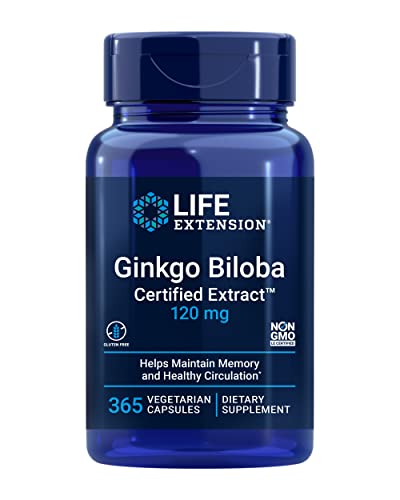
Cost per serving: $ | 365 servings | 1 capsule per serving
The most complete standardization on any label here.
Quick Stats
- Active ingredient + form: Ginkgo biloba leaf extract, standardized to 24% flavone glycosides and 6% terpene lactones, with under 1 ppm ginkgolic acid
- Dose per serving: 120 mg (1 capsule); the listing suggests one capsule twice a day
- Dose vs. research: One or two capsules match the 120 to 240 mg a day used in the trials we cite
- Third-party tested: Not stated on the listing
- Certifications: Vegetarian capsules (label)
- Who should skip: People taking blood thinners or with a bleeding disorder, anyone pregnant or breastfeeding, and people with seizure disorders, unless their doctor approves
What We Like
The label states both standard markers and a limit on ginkgolic acid, compounds that are reduced in standardized extracts because they can cause allergic reactions. A 365-capsule bottle lasts six months at two a day, and the brand sells the listing.
Watch Out For
The other ingredients include microcrystalline cellulose, silica and stearic acid, and no third-party certification is listed. Some buyers report headaches.
What Buyers Report
Buyers frequently mention trusting the brand, taking it for years and good value for a large bottle.
Side effects draw mixed comments, mostly headaches, and a few raise safety questions.
Bottom Line: The clearest label in this guide, at a low cost per day.
2. Doctor’s Best Extra Strength Ginkgo – Best Fully Standardized Budget
Our rating: 4.7/5

Cost per serving: $ | 120 servings | 1 capsule per serving
Both standard markers listed in milligrams, at about 11 cents a day.
Quick Stats
- Active ingredient + form: Ginkgo biloba leaf extract, at least 24% flavonol glycosides (28.8 mg) and 6% terpene lactones (7.2 mg)
- Dose per serving: 120 mg (1 capsule)
- Dose vs. research: Matches the 120 mg used per dose in the trials we cite
- Third-party tested: The listing says purity is verified but does not name a lab
- Certifications: Vegan, non-GMO, gluten-free, soy-free (label)
- Who should skip: People taking blood thinners or with a bleeding disorder, anyone pregnant or breastfeeding, and people with seizure disorders, unless their doctor approves
What We Like
The label gives both markers in milligrams, so you can see exactly what one capsule provides. The other ingredients are microcrystalline cellulose, silicon dioxide and the capsule, the brand sells the listing, and it has a large buyer base.
Watch Out For
No third-party certification is listed. Some buyers report an upset stomach or headaches, and a few say the effect faded over time.
What Buyers Report
Buyers frequently mention better memory and concentration, less brain fog and good value.
Side effects draw mixed comments, and some feel no change.
Bottom Line: A fully standardized 120 mg capsule at a budget price.
3. Nutricost Ginkgo Biloba 120 mg – Best Value
Our rating: 4.6/5
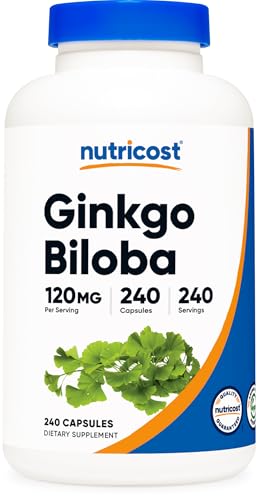
Cost per serving: $ | 240 servings | 1 capsule per serving
An eight-month bottle at the lowest daily cost here.
Quick Stats
- Active ingredient + form: Ginkgo biloba leaf extract, standardized to 24% flavone glycosides
- Dose per serving: 120 mg (1 capsule)
- Dose vs. research: Matches the 120 mg used per dose in the trials we cite
- Third-party tested: Not stated on the listing
- Certifications: Gluten-free, non-GMO (listing)
- Who should skip: People taking blood thinners or with a bleeding disorder, anyone pregnant or breastfeeding, and people with seizure disorders, unless their doctor approves
What We Like
At about 6 cents a day, it costs the least here, and a 240-capsule bottle lasts eight months at one a day. The other ingredients are rice flour and the capsule, and the listing is sold by eSupplements, which owns the Nutricost trademark. Himalaya scored the same; Nutricost ranks here because the scores were close and it costs about a quarter as much per day.
Watch Out For
The label states flavone glycosides but not terpene lactones, the second marker in standardized extracts. Some buyers report headaches or stomach upset, and a few buyers remind others to check with a doctor if they take a blood thinner.
What Buyers Report
Buyers frequently mention excellent value, clearer thinking and small, easy-to-swallow capsules.
Effectiveness and side effects draw mixed comments.
Bottom Line: The lowest-cost way to take a 24% ginkgo extract daily.
4. Himalaya Ginkgo Biloba – Best Clean-Label Capsule
Our rating: 4.5/5
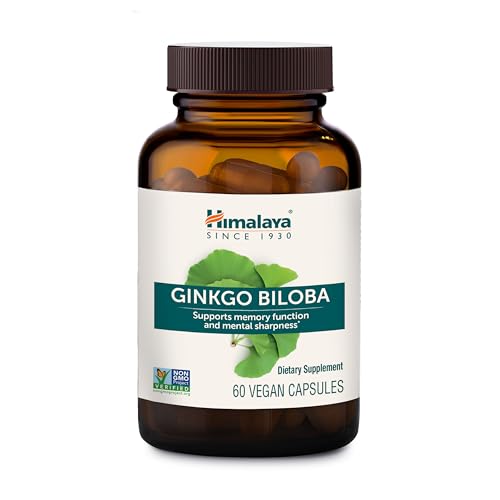
Cost per serving: $ | 60 servings | 1 capsule per serving
A fully standardized extract with only organic brown rice powder added.
Quick Stats
- Active ingredient + form: Ginkgo biloba leaf extract, 24% flavone glycosides (28 mg) and 6% terpene lactones (7 mg)
- Dose per serving: 120 mg (1 capsule)
- Dose vs. research: Matches the 120 mg used per dose in the trials we cite
- Third-party tested: Not stated on the listing
- Certifications: Vegan, gluten-free (label)
- Who should skip: People taking blood thinners or with a bleeding disorder, anyone pregnant or breastfeeding, and people with seizure disorders, unless their doctor approves
What We Like
The label states both markers, and the only other ingredients are organic brown rice powder and the capsule. Himalaya is a long-established herbal brand, and it sells the listing.
Watch Out For
At about 27 cents a day, it costs more than twice as much as Doctor’s Best for the same 120 mg. The buyer base is smaller, and no testing is listed.
What Buyers Report
Buyers frequently mention sharper focus, clarity and trusting the brand.
A few have not noticed a difference yet.
Bottom Line: A short, clean label from a trusted herbal brand, at a moderate price.
5. Nature’s Way Ginkgold Max – Best Tablet
Our rating: 4.4/5

Cost per serving: $$ | 60 servings | 1 tablet per serving
A standardized tablet from a brand whose parent company grows its own ginkgo.
Quick Stats
- Active ingredient + form: Ginkgold ginkgo biloba leaf extract, 24% flavone glycosides (28.8 mg) and 6% terpene lactones (7.2 mg)
- Dose per serving: 120 mg (1 tablet); the label allows one tablet twice daily for intensive use
- Dose vs. research: One or two tablets match the 120 to 240 mg a day used in the trials we cite
- Third-party tested: Nature’s Way says it tests every batch; no outside certification is listed
- Certifications: Vegan, gluten-free (label)
- Who should skip: People with a seizure or bleeding disorder or who take blood thinners, and anyone pregnant or nursing (label warning); the label also says to stop one week before surgery
What We Like
Ginkgold is a proprietary extract, and Nature’s Way says its parent company, Schwabe, grows all the ginkgo used in it. The label states both markers and gives clear safety warnings, and Amazon sells the listing.
Watch Out For
It is a tablet with more binders, including croscarmellose sodium, magnesium stearate and calcium silicate. At about 38 cents a day, it costs more than most capsules here, and one buyer notes it is now made in Wisconsin rather than Germany.
What Buyers Report
Buyers frequently mention better focus and mental clarity, and many are long-term users.
Some see no effect.
Bottom Line: A well-labeled tablet with traceable leaf sourcing, at a higher price.
6. Herbal Roots Organic Ginkgo Biloba – Best Organic
Our rating: 4.3/5

Cost per serving: $$ | 60 servings | 1 capsule per serving
The only USDA Organic ginkgo in our lineup, with no fillers.
Quick Stats
- Active ingredient + form: Organic ginkgo leaf extract standardized to 24% flavones and 6% terpene lactones, plus organic ginkgo leaf powder
- Dose per serving: 300 mg extract and 200 mg leaf (1 capsule)
- Dose vs. research: Above the 120 to 240 mg a day of extract used in the trials we cite
- Third-party tested: The listing shows a “third-party lab tested” badge but does not name a lab
- Certifications: USDA Organic, vegan (label)
- Who should skip: People taking blood thinners or with a bleeding disorder, anyone pregnant or breastfeeding, and people with seizure disorders, unless their doctor approves
What We Like
The only other ingredient is the organic capsule, and the label states both markers for the extract. It is certified organic, and buyers like the glass bottle with a metal lid.
Watch Out For
One capsule gives more extract than the daily amount in the studies we cite, and the added leaf powder is not standardized. At about 40 cents a day, it is one of the pricier options here, and a few buyers report side effects.
What Buyers Report
Buyers frequently mention clean ingredients, mental clarity and easy-to-swallow capsules.
Value and side effects draw mixed comments.
Bottom Line: The organic, filler-free choice, with a higher dose than the research used.
7. DEAL SUPPLEMENT Ginkgo Biloba 500 mg – Best Larger Dose
Our rating: 4.2/5

Cost per serving: $ | 120 servings | 2 capsules per serving
A larger daily dose in a four-month bottle.
Quick Stats
- Active ingredient + form: Ginkgo biloba leaf extract; the listing says it contains more than 24% flavonoid glycosides, but the Supplement Facts panel does not state it
- Dose per serving: 500 mg (2 capsules)
- Dose vs. research: About twice the 240 mg a day used in the trials we cite
- Third-party tested: The listing says “3rd party lab tested” but does not name a lab
- Certifications: Gluten-free, non-GMO (listing)
- Who should skip: Vegetarians and vegans (gelatin capsule), people taking blood thinners or with a bleeding disorder, anyone pregnant or breastfeeding, and people with seizure disorders, unless their doctor approves
What We Like
A 240-capsule bottle lasts four months at about 12 cents a day, and you can take one capsule instead of two for a lower dose. The brand sells the listing, and buyers often mention better memory and focus. NusaPure scored two points higher; DEAL ranks here because the scores were close and it has no added black pepper extract, which can change how some medicines are absorbed.
Watch Out For
The standardization appears only in the listing text, not on the label panel. The full serving is about twice the amount used in research, the capsule is gelatin, and one buyer says the ingredients on the bottle differed from the listing image.
What Buyers Report
Buyers frequently mention better memory, good value and medium-size capsules.
A few cannot tell whether it works.
Bottom Line: A low-cost, high-dose option if you check the label and consider taking one capsule.
8. NusaPure Ginkgo Biloba 250 mg – Best One Capsule, 250 mg
Our rating: 4.1/5

Cost per serving: $ | 200 servings | 1 capsule per serving
A 250 mg capsule that covers the higher studied dose in one pill.
Quick Stats
- Active ingredient + form: Ginkgo biloba leaf extract (50:1), standardized to at least 24% flavone glycosides, plus 2.5 mg BioPerine black pepper extract
- Dose per serving: 250 mg (1 capsule)
- Dose vs. research: Close to the 240 mg a day used in the dementia meta-analysis we cite
- Third-party tested: Not stated on the label
- Certifications: Vegan (label)
- Who should skip: People taking prescription medicines, since black pepper extract can affect absorption; people taking blood thinners or with a bleeding disorder, anyone pregnant or breastfeeding, and people with seizure disorders, unless their doctor approves
What We Like
One capsule a day gives 250 mg of extract, close to the 240 mg used in the meta-analysis, and costs about 12 cents a day. The brand sells the listing.
Watch Out For
The added black pepper extract is not needed for ginkgo and can affect some medicines. The label does not state terpene lactones, and the other ingredients include rice flour, silica and magnesium stearate.
What Buyers Report
Buyers frequently mention one capsule a day, good value and better memory.
A few say the effect faded or that they noticed no change.
Bottom Line: A convenient one-a-day 250 mg capsule, best for people not taking other medicines.
Products We Left Out
- Bronson Ginkgo Biloba Extra Strength: One of the best-selling ginkgo supplements on Amazon, but the label lists 125 mg of extract with only 2% flavone glycosides, far below the 24% used in research.
- Gaia Herbs Ginkgo Leaf: An organic blend of leaf and extract with 20 mg of flavonoid glycosides per serving, at about $1 a day.
- Wild & Organic Ginkgo Drops: Each serving gives 12 mg of extract, and the drops contain soy.
- Zazzee Organic Ginkgo Biloba: A promising organic extract with too few buyer reviews so far.
- Swanson Ginkgo Biloba 60 mg: A 60 mg capsule, half the 120 mg used per dose in research, and it sells far less on Amazon.
- Solaray, Source Naturals and Tebonin: The listings we found were sold by unknown third-party sellers.
- Ginkgo with ginseng, bacopa, gotu kola or other herbs: Outside this single-ingredient guide.
- NOW, Nature’s Bounty, Puritan’s Pride, Pure Encapsulations, Carlyle and BulkSupplements: Left out under our brand rules.
Ingredient Breakdown
Flavone Glycosides and Terpene Lactones
Standardized ginkgo extracts are measured by two groups of compounds: flavone (or flavonol) glycosides and terpene lactones, which include ginkgolides and bilobalide. The extracts used in research contain about 24% and 6%. A label that lists only an extract ratio, such as “50:1”, or a low percentage tells you much less.
Leaf Extract vs. Leaf Powder
Most of the research used concentrated leaf extracts, not dried leaf powder. Fresh or roasted ginkgo seeds are a different part of the plant and can be toxic.
What the Research Shows
- Dementia prevention: In the Ginkgo Evaluation of Memory trial, 3,069 adults aged 75 or older took 120 mg of ginkgo extract twice a day or a placebo for a median of about six years. Ginkgo did not reduce the rate of dementia or Alzheimer’s disease.
- People with dementia: A 2015 meta-analysis of nine trials in 2,561 patients found that a standardized extract at 240 mg a day helped stabilize or slow decline in thinking and daily function over 22 to 26 weeks. The NCCIH describes the benefit as modest and the evidence as inconsistent.
- Healthy adults: The NCCIH says it is uncertain whether ginkgo supplements marketed for brain health affect thinking in healthy people.
- Tinnitus: A 2022 Cochrane review of 12 studies found the benefits uncertain, with low to very low certainty of evidence.
- Leg pain from poor circulation: A Cochrane review of 14 trials found no evidence of a clinically significant benefit for intermittent claudication.
How to Take Ginkgo Biloba
- Follow the label: The trials we cite used 120 to 240 mg a day of standardized extract, often split into two doses.
- Take it with food: Stomach upset is one of the more common side effects.
- Stop before surgery: Ginkgo may increase bleeding, and Nature’s Way’s label says to stop one week before surgery; ask your surgeon.
- Give it time: The dementia trials ran 22 weeks or longer.
- Related guides: For other options people take for focus, see our citicoline supplements guide and lion’s mane supplements guide. Ginkgo is often sold with ginseng; for ginseng on its own, see our Panax ginseng supplements guide. For an herb studied for memory over 12 weeks, see our bacopa monnieri supplements guide.
Safety, Side Effects & Interactions
- Side effects: The NCCIH says ginkgo leaf extract is likely safe for most adults in moderate amounts and lists dizziness, digestive symptoms and headache as the most common side effects.
- Bleeding: The NCCIH says ginkgo may increase bleeding risk in people taking anticoagulants such as warfarin.
- Other medicines: Ginkgo may interact with other drugs, so check with your doctor or pharmacist if you take any medicine.
- Pregnancy: The NCCIH says ginkgo may be unsafe during pregnancy and may cause early labor or extra bleeding during delivery.
- Seeds: The NCCIH says fresh ginkgo seeds are toxic, and serious side effects have been reported in people who ate roasted seeds or the crude plant.
Who Should Avoid It
- Anyone pregnant or breastfeeding
- People taking blood thinners or with a bleeding disorder, unless their doctor approves
- People with a seizure disorder, unless their doctor approves (the Ginkgold label warns about this)
- Anyone with surgery coming up, unless their doctor approves
How to Choose a Ginkgo Biloba Supplement
Standardization
Look for a leaf extract that states about 24% flavone glycosides and 6% terpene lactones on the Supplement Facts panel. Life Extension, Doctor’s Best, Himalaya, Ginkgold and Herbal Roots list both.
Dose
A 120 mg capsule once or twice a day matches the research. Products with 500 mg or more per day go beyond what was studied.
Other Ingredients
Simple labels are easy to find. Watch for gelatin capsules and added black pepper extract.
Cost per Day
Products here range from about 6 to 40 cents a day at the label serving.
Red Flags on the Label
- No flavone glycoside percentage, or a very low one such as 2%
- “Equivalent to” leaf milligrams instead of extract milligrams
- Ginkgo blends that hide how much ginkgo you get
- Claims to prevent dementia, treat tinnitus or improve circulation in disease
Important: These supplements are not intended to diagnose, treat, cure, or prevent any disease. Results vary by individual. If you have a health condition or take medications, check with your doctor before adding any new supplement to your routine.
FAQ
What is the best ginkgo biloba supplement?
In our comparison, Life Extension Ginkgo Biloba Certified Extract ranked first for its full standardization and ginkgolic acid limit. Nutricost is the best value, and Herbal Roots is the best organic option.
How much ginkgo biloba should I take a day?
The trials we cite used 120 to 240 mg a day of standardized extract, often split into two doses. Follow the label and ask your doctor first.
Does ginkgo biloba improve memory?
It did not prevent dementia in a large trial of older adults. A meta-analysis found a modest benefit at 240 mg a day for people who already have dementia, and its effect in healthy people is uncertain.
Does ginkgo help tinnitus?
A 2022 Cochrane review found the benefits uncertain, and the NCCIH says research suggests it does not relieve tinnitus.
Is ginkgo biloba safe to take every day?
Leaf extract is likely safe for most adults in moderate amounts, according to the NCCIH. It can increase bleeding risk, especially with blood thinners, and people who are pregnant should avoid it.
What does 24% and 6% mean on a ginkgo label?
They are the amounts of flavone glycosides and terpene lactones in the extract, the two markers used to standardize ginkgo in research.
Our Take
Life Extension Ginkgo Biloba Certified Extract is our top pick among ginkgo biloba supplements for its full 24% and 6% standardization and stated ginkgolic acid limit. Doctor’s Best is a close, fully standardized budget option, Nutricost is the best value, and Herbal Roots is the best organic choice.
Choose Himalaya for a clean-label capsule, Nature’s Way Ginkgold Max for a tablet with traceable leaf sourcing, DEAL SUPPLEMENT for a larger dose at a low price, or NusaPure for 250 mg in one capsule.
Practical tip: check the label for 24% and 6%, and tell your doctor you take ginkgo before any surgery.
Sources
- Ginkgo biloba for prevention of dementia: a randomized controlled trial (2008) — PubMed
- Efficacy and adverse effects of ginkgo biloba for cognitive impairment and dementia: a systematic review and meta-analysis (2015) — PubMed
- Ginkgo biloba for tinnitus (2022) — Cochrane Database of Systematic Reviews, PubMed
- Ginkgo biloba for intermittent claudication (2013) — Cochrane Database of Systematic Reviews, PubMed
- Ginkgo: Usefulness and Safety — National Center for Complementary and Integrative Health
- Ginkgold — Nature’s Way
Labels, sellers and cost tiers last checked: November 20, 2026.
Update log
- November 20, 2026: First published. 8 products compared.
- November 25, 2026: Added a link to our bacopa monnieri supplements guide. No product or ranking changes.


