
| Best Overall | Best Value Clinical Dose | Best Budget | |
|---|---|---|---|
| Pick | Natural Factors Pure Saffron Extract | Swanson Saffron Extract 30 mg | Nutricost Saffron Extract 88.5 mg |
| Why | affron at 28 mg, the extract and dose used in several mood and sleep trials, from a brand that names its testing lab. | A standardized 30 mg stigma extract for the lowest daily cost among studied-dose products. | The lowest cost per day, though the extract is not standardized like those in the studies. |
| Cost per serving | $$ | $ | $ |
Quick answer: Of the saffron supplements we compared, Natural Factors Pure Saffron Extract is the best choice for most people: it gives 28 mg of affron, the standardized extract and dose used in several placebo-controlled mood and sleep trials, and the brand names its testing lab. If you want the same research-level dose for less, Swanson Saffron Extract 30 mg costs less per day, and Nutricost Saffron Extract 88.5 mg is the budget pick.
Saffron supplements are made from the red stigmas of the Crocus sativus flower and are mostly bought for mood, stress and sleep. The shelf is crowded with 88.5 mg capsules, but most mood studies used about 28 to 30 mg a day of a standardized extract, so the amount on the front of the bottle tells you less than the extract it names.
We compared eight products by extract type and standardization, dose, other ingredients, verified testing, recent recalls, who sells the listing and cost per day, using our how we test criteria. Every product here made our shortlist, and our ratings show how they rank against each other.
The evidence is encouraging but not settled: trials mostly measured self-reported symptoms, and saffron is not a replacement for treatment of depression. We explain what the research shows below. Shopping for a child? See our separate guide to saffron supplements for kids.
Our Top Picks
Best Overall: Natural Factors Pure Saffron Extract – CHECK PRICE →
Best Value Clinical Dose: Swanson Saffron Extract 30 mg – CHECK PRICE →
Best Budget: Nutricost Saffron Extract 88.5 mg – CHECK PRICE →
Best NSF-Certified: THORNE Rapid Relief Saffron – CHECK PRICE →
Best Softgel: Sports Research Pure Saffron 30 mg – CHECK PRICE →
Best for Appetite: Life Extension Optimized Saffron – CHECK PRICE →
Comparison Table
| Rank | Product | Form | Dose | Cost/Serving | Third-Party Tested | Best For |
|---|---|---|---|---|---|---|
| 1 | Natural Factors Pure Saffron Extract | Capsule | 28 mg affron per capsule | $$ | Yes | Best Overall |
| 2 | Swanson Saffron Extract 30 mg | Capsule | 30 mg Safr’Inside per capsule | $ | Not stated | Best Value Clinical Dose |
| 3 | THORNE Rapid Relief Saffron | Capsule | 30 mg Safr’Inside per capsule | $$$ | Yes | Best NSF-Certified |
| 4 | Sports Research Pure Saffron 30 mg | Softgel | 30 mg affron per softgel | $$ | Not stated | Best Softgel |
| 5 | Nature’s Way Saffron 28 mg | Capsule | 28 mg affron per capsule | $$ | Not stated | Best Value affron Capsule |
| 6 | NOW Saffron 50 mg | Capsule | 50 mg stigma (10% crocins) per capsule | $ | Not stated | Best Crocin-Standardized |
| 7 | Life Extension Optimized Saffron | Capsule | 156 mg Satiereal per 2 capsules | $$$ | Not stated | Best for Appetite |
| 8 | Nutricost Saffron Extract 88.5 mg | Capsule | 88.5 mg extract per capsule | $ | Not stated | Best Budget |
Cost tiers per day at the label dose: $ under $0.40 · $$ $0.40–$0.80 · $$$ over $0.80 (checked November 2026).
In-Depth Reviews: Top 8 Saffron Supplements of 2026
1. Natural Factors Pure Saffron Extract – Best Overall
Our rating: 4.8/5

Cost per serving: $$ | 30 servings | 1 capsule per serving
The studied affron extract at its studied dose, from a brand that names its testing lab.
Quick Stats
- Active ingredient + form: affron saffron stigma extract, standardized to 3.5% Lepticrosalides (crocins and safranal)
- Dose per serving: 28 mg per capsule
- Dose vs. research: Matches the 28 mg/day used in affron mood and sleep trials
- Third-party tested: Yes (the brand says products are tested by ISURA, an independent lab; no NSF or USP listing)
- Certifications: Non-GMO; free of dairy, gluten, soy and other major allergens (brand claim)
- Who should skip: Pregnant or breastfeeding women; people taking antidepressants unless their doctor approves
What We Like
It uses affron at 28 mg a day, the dose that improved mood scores compared with placebo in a 4-week trial of 128 adults with low mood (Kell 2017) and in a 12-week trial of 202 adults (Lopresti 2025). The other ingredients are cellulose, the vegetable capsule, magnesium stearate, stearic acid and silica.
It is sold on Amazon by Pattern, the brand’s authorized reseller.
Watch Out For
A 30-capsule bottle lasts one month and costs more per day than Nature’s Way, which uses the same 28 mg affron. Choose the 30-count listing; buyers report that a separate “60-capsule” listing shipped 30-count bottles.
What Buyers Report
Buyers frequently mention a lift in mood without jitters, better sleep and help with low mood or anxiety, and many plan to reorder.
A smaller group reports nausea or stomach aches, and some find the price high for the capsule count.
Bottom Line: The research-matched affron dose with a named testing lab, for a moderate daily cost.
2. Swanson Saffron Extract 30 mg – Best Value Clinical Dose
Our rating: 4.7/5
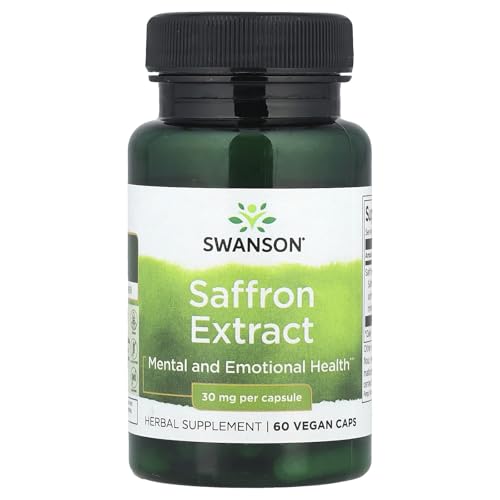
Cost per serving: $ | 60 servings | 1 capsule per serving
A standardized organic stigma extract at 30 mg for the lowest daily cost among research-dose products.
Quick Stats
- Active ingredient + form: Safr’Inside organic saffron stigma extract, standardized to at least 2% safranal
- Dose per serving: 30 mg per capsule
- Dose vs. research: Within the 28–30 mg/day range used in most mood trials
- Third-party tested: Not stated (the brand says it tests for purity and potency but names no lab; no NSF or USP listing)
- Certifications: Organic extract, vegan
- Who should skip: Pregnant or breastfeeding women; people taking antidepressants unless their doctor approves
What We Like
A 60-capsule bottle gives two months of a standardized 30 mg stigma extract for well under half the daily cost of our top pick. The other ingredients are brown rice flour, a pullulan capsule and maltodextrin.
It is sold on Amazon by Pattern, the brand’s authorized reseller.
Watch Out For
The testing claim names no lab. The listing is new, so buyer feedback is still limited and includes many free-product reviews.
What Buyers Report
Buyers frequently mention good value, small capsules and steadier mood.
There are too few reviews to see clear repeated complaints; one buyer reported restlessness.
Bottom Line: The best-value way to take a studied saffron dose.
3. THORNE Rapid Relief Saffron – Best NSF-Certified
Our rating: 4.6/5

Cost per serving: $$$ | 30 servings | 1 capsule per serving
The only saffron supplement here with an NSF listing we could verify.
Quick Stats
- Active ingredient + form: Safr’Inside saffron stigma extract
- Dose per serving: 30 mg per capsule
- Dose vs. research: Within the 28–30 mg/day range used in most mood trials
- Third-party tested: Yes (NSF/ANSI 173 certified; listed in NSF’s database in November 2026)
- Certifications: NSF/ANSI 173
- Who should skip: Pregnant or breastfeeding women; people taking antidepressants unless their doctor approves
What We Like
NSF lists Thorne Rapid Relief Saffron as certified, so its contents have been checked independently. The capsule is small and the other ingredients are cellulose, the vegetable capsule and calcium laurate.
It is sold on Amazon by Pattern, Thorne’s authorized reseller.
Watch Out For
It costs the most per day in this lineup, and a 30-capsule bottle lasts one month. The “rapid relief” name goes beyond what the trials measured, which looked at weeks of daily use.
What Buyers Report
Buyers frequently mention steadier mood, especially around perimenopause, and very small capsules.
There are too few reviews to see clear repeated complaints; price is the main concern.
Bottom Line: The pick for buyers who want independent certification and accept a higher price.
4. Sports Research Pure Saffron 30 mg – Best Softgel
Our rating: 4.5/5

Cost per serving: $$ | 60 servings | 1 softgel per serving
affron at 30 mg in a small plant-based softgel.
Quick Stats
- Active ingredient + form: affron saffron stigma extract in a plant-based softgel with MCT oil
- Dose per serving: 30 mg per softgel
- Dose vs. research: Within the 28–30 mg/day range used in most mood trials
- Third-party tested: Not stated (the listing says third-party tested but names no lab; no NSF listing for this product)
- Certifications: Vegan, non-GMO, gluten-free
- Who should skip: Pregnant or breastfeeding women; people taking antidepressants unless their doctor approves
What We Like
It gives the studied affron extract in a softgel that many buyers find easy to swallow, and a bottle lasts two months. The softgel is made from tapioca starch and colored with annatto and lycopene.
It is sold by the brand.
Watch Out For
The softgel contains added colors and oils, and the testing claim names no lab. It costs more per day than Swanson’s 30 mg capsule.
What Buyers Report
Buyers frequently mention better mood, less stress, small softgels and fewer sweet cravings, and several have taken it for months.
A smaller group reports dizziness, nausea or no effect.
Bottom Line: A well-made affron softgel at a studied dose.
5. Nature’s Way Saffron 28 mg – Best Value affron Capsule
Our rating: 4.4/5

Cost per serving: $$ | 60 servings | 1 capsule per serving
The same 28 mg affron as our top pick, for less per day.
Quick Stats
- Active ingredient + form: affron saffron stigma extract
- Dose per serving: 28 mg per capsule
- Dose vs. research: Matches the 28 mg/day used in affron mood and sleep trials
- Third-party tested: Not stated (no NSF or USP listing)
- Certifications: Vegan, gluten-free
- Who should skip: Pregnant or breastfeeding women; people with a bleeding disorder or taking anticoagulants (the label’s own warning)
What We Like
It matches our top pick’s extract and dose in a 60-capsule bottle, so it costs less per day. The other ingredients are cellulose, the vegetable capsule and magnesium stearate, and it is sold by Amazon.
Watch Out For
The brand names no testing lab. Health Canada listed a recall of a Nature’s Way elderberry syrup in March 2025; this product was not involved, but it lowered the brand’s testing score in our ranking.
What Buyers Report
Buyers frequently mention small capsules, better sleep and a more positive outlook after a few weeks.
There are too few reviews to see clear repeated complaints; one buyer questioned how full the capsules were.
Bottom Line: The lower-cost way to take affron at its studied dose.
6. NOW Saffron 50 mg – Best Crocin-Standardized
Our rating: 4.3/5

Cost per serving: $ | 60 servings | 1 capsule per serving
Whole saffron stigma standardized to crocins, at a low daily cost.
Quick Stats
- Active ingredient + form: Saffron stigma, standardized to at least 10% total crocins
- Dose per serving: 50 mg per capsule
- Dose vs. research: Above the 28–30 mg/day of standardized extract used in most mood trials
- Third-party tested: Not stated (NOW cites its in-house lab and GMP certification; no NSF or USP listing)
- Certifications: Vegan, GMP-certified facility
- Who should skip: Pregnant or breastfeeding women; people taking antidepressants unless their doctor approves
What We Like
The label states the plant part and a crocin percentage, and the other ingredients are cellulose, the vegetable capsule, stearic acid and silica. It is sold by Amazon at a low cost per day.
Watch Out For
The 50 mg dose is not a branded extract studied in the trials. NOW recalled a phosphatidylserine product in January 2024; this product was not involved, but it lowered the brand’s testing score in our ranking.
What Buyers Report
Buyers frequently mention good quality, better sleep and calmer moods.
Effectiveness is mixed, some dislike the capsule taste, and a few report feeling more anxious.
Bottom Line: A clearly labeled, low-cost saffron, though not a studied extract.
7. Life Extension Optimized Saffron – Best for Appetite
Our rating: 4.2/5
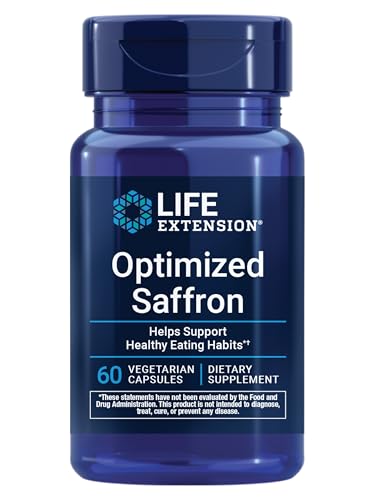
Cost per serving: $$$ | 30 servings | 2 capsules per serving
Satiereal, the saffron extract studied for snacking and satiety.
Quick Stats
- Active ingredient + form: Satiereal saffron stigma extract, standardized to 0.34% safranal
- Dose per serving: 78 mg per capsule; the label says 1 capsule twice daily (156 mg a day)
- Dose vs. research: Close to the 176.5 mg/day used in the Satiereal snacking trial
- Third-party tested: Not stated (no NSF or USP listing)
- Certifications: Non-GMO, gluten-free
- Who should skip: Pregnant or breastfeeding women; anyone looking mainly for mood support at a lower cost
What We Like
It is the only product here built around the appetite research: in an 8-week trial in 60 mildly overweight women, Satiereal reduced snacking and body weight more than placebo (Gout 2010). It is sold by Amazon.
Watch Out For
Two capsules a day make it one of the more expensive options, and the snacking evidence comes from one small trial. The label says to take it with food.
What Buyers Report
Buyers frequently mention more energy, better mood and, for some, fewer cravings.
Results on appetite are mixed, value gets mixed feedback, and a few report irritability.
Bottom Line: The pick for buyers mainly interested in snacking and cravings.
8. Nutricost Saffron Extract 88.5 mg – Best Budget
Our rating: 4.1/5

Cost per serving: $ | 240 servings | 1 capsule per serving
The lowest cost per day, with a simple 88.5 mg extract.
Quick Stats
- Active ingredient + form: Saffron extract labeled as from the flower, standardized to 0.3% safranal
- Dose per serving: 88.5 mg per capsule
- Dose vs. research: Not directly comparable; most mood trials used 28–30 mg of a stigma extract
- Third-party tested: Not stated (the label says third-party tested but names no lab)
- Certifications: GMP-compliant facility, non-GMO, gluten-free, vegetarian
- Who should skip: Pregnant or breastfeeding women; people taking antidepressants unless their doctor approves
What We Like
A 240-capsule bottle lasts eight months at one capsule a day, so it costs the least per day here. The other ingredients are rice flour, the vegetable capsule and magnesium stearate.
It is sold by the brand’s own Amazon storefront.
Watch Out For
The label says “flower,” not stigma, and the extract is not one used in the trials, so the 88.5 mg number is hard to compare with research doses. The testing claim names no lab.
What Buyers Report
Buyers frequently mention good value, easy-to-swallow capsules, more energy and a lighter mood.
Effectiveness is mixed, and some report headaches.
Bottom Line: The cheapest daily saffron, best for buyers who value price over a studied extract.
Ingredient Breakdown
Saffron and Mood
A 2026 meta-analysis of 34 placebo-controlled trials in adults found saffron reduced self-reported depression and anxiety scores, but not clinician-rated scores, and rated the certainty of evidence as moderate (Nutr Neurosci 2026). In trials comparing saffron with SSRI antidepressants, the difference in symptom improvement was not significant, and saffron had fewer adverse events (Nutr Rev 2025). Those trials were small, and saffron should not replace prescribed treatment.
affron
affron is a stigma extract standardized to 3.5% Lepticrosalides. In 128 adults with low mood, 28 mg a day for four weeks improved mood scores compared with placebo, while 22 mg did not (Kell 2017). In a 12-week trial in 202 adults with subclinical depressive symptoms, 28 mg a day improved the main depression score, though most secondary outcomes did not differ from placebo (Lopresti 2025).
Saffron and Sleep
In a 28-day trial of adults with self-reported poor sleep, affron 14 mg twice daily improved insomnia and sleep quality scores compared with placebo, with no reported adverse effects (Lopresti 2020).
Satiereal and Snacking
Satiereal is a stigma extract studied for appetite. In 60 mildly overweight women, 176.5 mg a day for eight weeks reduced snacking frequency and body weight compared with placebo (Gout 2010).
How to Take Saffron
Take one capsule a day of a 28–30 mg standardized extract, or follow the label for products like Satiereal. In the sleep trial, affron was split into two 14 mg doses (Lopresti 2020).
Mood trials ran four to twelve weeks (Kell 2017; Lopresti 2025), so give a product at least a month before judging it. If low mood lasts more than two weeks or affects daily life, talk to a doctor.
For other sleep-focused options, see our GABA supplements guide. For a serotonin precursor, see our 5-HTP supplements guide, which explains why it should not be combined with antidepressants.
Safety, Side Effects & Interactions
A 2026 review of 102 clinical trials found saffron generally well tolerated, with an estimated adverse event rate of about 17.5%, mostly minor stomach problems, and advised clinical monitoring at higher doses or with long-term use (Health Sci Rep 2026). Buyers sometimes report nausea, headaches or dizziness.
- Blood pressure and blood thinners: In healthy adults, 400 mg of saffron a day for a week lowered standing blood pressure and slightly lowered platelets, though values stayed normal (Modaghegh 2008). Some labels warn people on anticoagulants or with bleeding disorders to check with a doctor.
- Antidepressants and psychiatric medicines: Saffron has been compared with SSRIs, not studied as an add-on for most people. Do not combine or swap without your prescriber, especially with bipolar disorder.
- Pregnancy and breastfeeding: Several labels we reviewed tell pregnant or breastfeeding women not to use the product or to ask a doctor first.
Who Should Avoid It
- Pregnant or breastfeeding women
- People taking antidepressants or other psychiatric medicines, unless their prescriber approves
- People with a bleeding disorder or taking blood thinners
- Children, unless a pediatrician approves (see our kids’ guide)
How to Choose Saffron Supplements
Form and Bioavailability
Look for a stigma extract with a named standardization, such as affron, Safr’Inside or Satiereal, or a stated crocin or safranal percentage. “Flower” extracts and unstandardized powders are harder to compare with research.
Dosage – What to Look For
Most mood trials used 28–30 mg a day of a standardized extract (Kell 2017). Satiereal was studied at 176.5 mg a day for snacking (Gout 2010). A bigger number on a non-standardized product does not mean a stronger effect.
Third-Party Testing
Only Thorne Rapid Relief Saffron had an NSF listing we could verify in November 2026, and none had a USP listing. Saffron is an expensive spice, so prefer brands that name a branded extract and their testing lab.
Cost Per Serving vs. Cost Per Bottle
Compare the cost of a daily studied dose. Some 30-capsule bottles cost more per day than 60-capsule bottles of the same extract.
Red Flags on the Label
- Claims that it treats depression, anxiety or ADHD
- No plant part, extract name or standardization listed
- Mood blends that add St. John’s wort or 5-HTP at undisclosed doses
- Listings sold by unknown third-party sellers
- Testing claims with no lab or certifier named
Important: These supplements are not intended to diagnose, treat, cure, or prevent any disease. Results vary by individual. If you have a health condition or take medications, check with your doctor before adding any new supplement to your routine.
FAQ
What are saffron supplements good for?
They are studied mainly for low mood, stress and sleep, and one extract for snacking. Trials show improvements in self-reported symptoms, but the evidence is still moderate.
Are there any downsides to taking saffron?
Most people tolerate it well, but some get stomach upset, headaches or dizziness. It may lower blood pressure slightly at high doses, and several labels advise against use during pregnancy.
What is the best form of saffron to take?
A standardized stigma extract such as affron or Safr’Inside at 28–30 mg a day matches most mood research. Satiereal is the extract studied for appetite.
Who should not take saffron supplements?
Pregnant or breastfeeding women, people on antidepressants or blood thinners, and people with bipolar disorder should avoid it unless a doctor approves.
How long does saffron take to work?
Mood and sleep trials measured results after four to twelve weeks. Give a product at least a month at a consistent dose.
Is saffron as effective as antidepressants?
Small trials found no significant difference compared with SSRIs, with fewer side effects. These trials are limited, so do not stop or replace prescribed medicine on your own.
Our Take
Natural Factors Pure Saffron Extract is our top pick among saffron supplements because it gives affron at the 28 mg dose used in trials and names its testing lab. Swanson Saffron Extract 30 mg gives a studied dose for less, and THORNE Rapid Relief Saffron is the NSF-certified choice.
Sports Research Pure Saffron 30 mg suits buyers who prefer a softgel, Nature’s Way Saffron 28 mg is a lower-cost affron capsule, and NOW Saffron 50 mg is a clearly standardized budget option. Life Extension Optimized Saffron is the appetite pick, and Nutricost Saffron Extract 88.5 mg costs the least per day.
Practical tip: rate your mood and sleep from 1 to 10 each week for the first month, so you can tell whether saffron is helping instead of guessing.
Sources
- Effect of saffron on depression, anxiety and mood disorder: a GRADE assessed systematic review and meta-analysis of 34 randomized controlled trials (2026) — PubMed
- Effect of Saffron Versus Selective Serotonin Reuptake Inhibitors (SSRIs) in Treatment of Depression and Anxiety: A Meta-analysis of Randomized Controlled Trials (2025) — PubMed
- affron, a novel saffron extract (Crocus sativus L.) improves mood in healthy adults over 4 weeks (2017) — PubMed
- An Examination into the Effects of a Saffron Extract (Affron) on Mood and General Wellbeing in Adults Experiencing Low Mood (2025) — PubMed
- Effects of saffron on sleep quality in healthy adults with self-reported poor sleep (2020) — PubMed
- Satiereal, a Crocus sativus L extract, reduces snacking and increases satiety in mildly overweight, healthy women (2010) — PubMed
- Adverse Events of Saffron (Crocus sativus L.): Systematic Review of Current Evidence (2026) — PubMed
- Safety evaluation of saffron (Crocus sativus) tablets in healthy volunteers (2008) — PubMed
Labels, sellers and cost tiers last checked: November 5, 2026.
Update log
- November 5, 2026: First published. 8 products compared.
- November 12, 2026: Added a link to our 5-HTP supplements guide.


