
| Best Overall | Best Organic | Best with CoQ10 | |
|---|---|---|---|
| Pick | Nutricost Red Yeast Rice 1200 mg | Designs for Health Red Yeast Rice | Nature’s Craft Red Yeast Rice with CoQ10 |
| Why | Plain 1,200 mg red yeast rice, short ingredient list, lowest cost per day in our lineup. | US-grown organic rice, and the brand says it assays citrinin and monacolins. | 1,200 mg red yeast rice plus 100 mg CoQ10 at a mid-range cost. |
| Cost per serving | $ | $$$ | $$ |
Quick answer: Of the red yeast rice supplements we compared, Nutricost Red Yeast Rice 1200 mg is the best pick for most people: a plain 1,200 mg daily serving with almost no extras, sold by the brand, at the lowest cost per day in our lineup. If you care most about how the rice is grown and screened, Designs for Health Red Yeast Rice uses US-grown organic rice and says it tests for citrinin. No label tells you how much monacolin K you are getting, so talk to your doctor and recheck your cholesterol after a few months.
Red yeast rice supplements are hard to shop for because the number that matters is never on the label. The active compound, monacolin K, is chemically the same as the statin drug lovastatin, and the FDA does not allow supplements with added or enhanced lovastatin (NCCIH). So every bottle lists milligrams of red yeast rice instead, and lab tests show the monacolin K inside can vary by more than 60-fold between brands (Cohen 2017).
We compared 8 products on what can be checked: the full label, the other ingredients, what each brand says about citrinin (a kidney toxin from fermentation) and testing, who sells the Amazon listing, and the cost of a daily serving. You can read the full method in how we test. Every product here made our shortlist, and our ratings show how they rank against each other.
Our Top Picks
Best Overall: Nutricost Red Yeast Rice 1200 mg – CHECK PRICE →
Best Organic: Designs for Health Red Yeast Rice – CHECK PRICE →
Best with CoQ10: Nature’s Craft Red Yeast Rice with CoQ10 – CHECK PRICE →
Best Large Bottle: NatureBell Red Yeast Rice with CoQ10 – CHECK PRICE →
Comparison Table
| Rank | Product | Form | Dose | Cost/Serving | Third-Party Tested | Best For |
|---|---|---|---|---|---|---|
| 1 | Nutricost Red Yeast Rice 1200 mg | Capsule | 1,200 mg RYR | $ | Not stated | Best Overall |
| 2 | Designs for Health Red Yeast Rice | Capsule | 1,200 mg organic RYR | $$$ | Not stated | Best Organic |
| 3 | Nature’s Craft Red Yeast Rice with CoQ10 | Capsule | 1,200 mg RYR + 100 mg CoQ10 | $$ | Not stated | Best with CoQ10 |
| 4 | Zazzee Organic Red Yeast Rice with CoQ10 | Capsule | 1,200 mg RYR extract + 80 mg CoQ10 | $$ | Not stated | Best Organic Budget |
| 5 | Jarrow Formulas Red Yeast Rice + CoQ10 | Capsule | 1,200 mg RYR + 100 mg CoQ10 | $$ | Not stated | Best Sold by Amazon |
| 6 | NatureBell Red Yeast Rice with CoQ10 | Capsule | 600 mg RYR extract + 100 mg CoQ10 | $ | Not stated | Best Large Bottle |
| 7 | Thorne Red Yeast Rice | Capsule | 900 mg RYR | $$ | Not stated | Best One-a-Day |
| 8 | ForestLeaf Red Yeast Rice 1215 mg with CoQ10 | Capsule | 1,215 mg RYR + CoQ10, ALA, flax | $$$ | Not stated | Best Multi-Ingredient |
Cost tiers per daily serving: $ under $0.30 · $$ $0.30–$0.60 · $$$ over $0.60 (checked November 2026).
In-Depth Reviews: Top 8 Red Yeast Rice Supplements of 2026
1. Nutricost Red Yeast Rice 1200 mg – Best Overall
Our rating: 4.8/5

Cost per serving: $ | 60 servings | 2 capsules per serving
Nutricost keeps it simple: red yeast rice powder in a plant capsule, with nothing added for marketing.
Quick Stats
- Active ingredient + form: Red yeast rice powder (Monascus purpureus)
- Dose per serving: 1,200 mg
- Dose vs. research: Unknown – the label does not state monacolin K
- Third-party tested: Not stated (the brand shows a “third-party tested” badge but names no lab)
- Certifications: Made in an NSF-registered GMP facility (a facility registration, not a product certification)
- Who should skip: People taking a statin
What We Like
The ingredient list is as short as it gets: red yeast rice, a hypromellose capsule and magnesium stearate. The 1,200 mg daily serving matches the amount most brands use, and it costs the least per day of any product we compared.
The listing is sold by eSupplements, Nutricost’s parent company, so you are buying from the brand rather than an unknown reseller.
Watch Out For
Nutricost does not say anything about citrinin on the label or listing. That cost it points on testing, because citrinin is the main contamination risk in this category. Like every product here, it does not tell you how much monacolin K is inside.
What Buyers Report
Buyers often mention good value, the typical Nutricost quality they expect from the brand, and capsules that are easy to swallow. Several say they started it on their doctor’s advice and saw lower cholesterol readings at their next blood test, often alongside diet changes.
Side-effect reports are split. Some buyers notice nothing, while others describe allergic reactions, and one buyer linked a gout flare to starting the product. A few say their blood sugar crept up slightly.
Bottom Line: The simplest, lowest-cost way to try red yeast rice, as long as you and your doctor accept that citrinin testing is not stated.
2. Designs for Health Red Yeast Rice – Best Organic
Our rating: 4.7/5
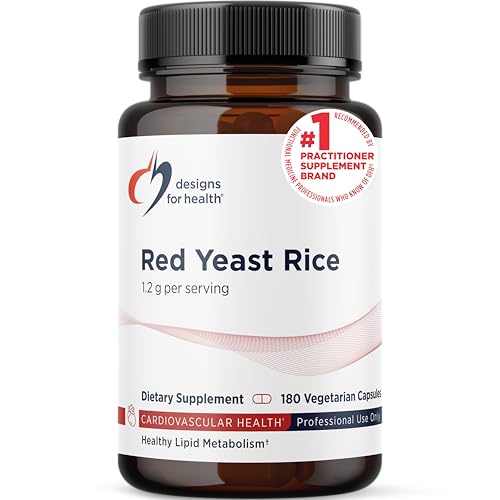
Cost per serving: $$$ | 90 servings | 2 capsules per serving
This is the only product in our lineup that says it checks each batch for both citrinin and the naturally occurring monacolins.
Quick Stats
- Active ingredient + form: USDA-certified organic red yeast rice, grown in the US
- Dose per serving: 1.2 g (1,200 mg)
- Dose vs. research: Unknown – the label does not state monacolin K
- Third-party tested: Not stated (the brand says it assays citrinin and monacolins but does not name the lab)
- Certifications: USDA Organic; GMP facility registered with NSF
- Who should skip: People taking a statin
What We Like
The label lists only organic red yeast rice, a cellulose capsule and L-leucine. Designs for Health says it assays its rice to keep citrinin undetectable and to keep naturally occurring monacolin levels consistent, which goes further than any other brand we reviewed.
The listing is sold by Designs for Health itself, and a 180-capsule bottle lasts three months.
Watch Out For
It costs the most per day of the plain products here. The brand describes its testing but does not publish results or name the lab, so we could not verify it, and the monacolin amount is still not on the label.
What Buyers Report
Many buyers say a doctor or cardiologist recommended it, and a large share report lower cholesterol numbers on follow-up blood work. Buyers also like that the listing is sold by the manufacturer rather than a third party.
Complaints center on price, with some calling it overpriced, and a smaller group mentions heartburn.
Bottom Line: The most transparent sourcing in the lineup, worth the higher cost if citrinin screening matters most to you.
3. Nature’s Craft Red Yeast Rice with CoQ10 – Best with CoQ10
Our rating: 4.6/5

Cost per serving: $$ | 60 servings | 2 capsules per serving
Nature’s Craft pairs a standard 1,200 mg of red yeast rice with a full 100 mg of CoQ10, for less per day than the other 100 mg CoQ10 formula in our lineup.
Quick Stats
- Active ingredient + form: Red yeast rice powder + CoQ10 (ubiquinone)
- Dose per serving: 1,200 mg red yeast rice, 100 mg CoQ10
- Dose vs. research: Unknown – the label does not state monacolin K
- Third-party tested: Not stated (the listing says “third-party tested” but names no lab)
- Certifications: None verified
- Who should skip: People taking a statin
What We Like
You get both ingredients people usually look for in one capsule, with a short list of standard capsule ingredients (hypromellose, magnesium stearate, silicon dioxide, microcrystalline cellulose). The listing also tells people with liver conditions and those taking medications to check with a doctor first.
Watch Out For
There is no citrinin statement on the label or listing. Taking CoQ10 alongside red yeast rice is common, but evidence that it prevents statin-related muscle aches is mixed, so it is a convenience rather than a safety feature. If you want CoQ10 on its own, see our CoQ10 supplements guide.
What Buyers Report
Buyers frequently say their cholesterol came down at their next check, and they like that the capsules are easy to swallow, have no aftertaste and are reasonably priced.
Side-effect reports are mixed: a sizable group mentions stomach pain, and some describe muscle or joint aches similar to what they felt on statins, which made them stop.
Bottom Line: The best-value way to get red yeast rice and 100 mg of CoQ10 together.
4. Zazzee Organic Red Yeast Rice with CoQ10 – Best Organic Budget
Our rating: 4.5/5

Cost per serving: $$ | 60 servings | 2 capsules per serving
Zazzee is the cheaper organic option, and it names the type of lab used for citrinin screening.
Quick Stats
- Active ingredient + form: Organic red yeast rice 20:1 extract + CoQ10 (ubiquinone)
- Dose per serving: 1,200 mg extract (labeled as equal to 24,000 mg of red yeast rice powder), 80 mg CoQ10
- Dose vs. research: Unknown – the label does not state monacolin K
- Third-party tested: Not stated (citrinin screening by an ISO 17025 lab, but the lab is not named)
- Certifications: USDA Organic
- Who should skip: People taking a statin
What We Like
The listing says the rice is cleaned of citrinin after fermentation and screened by an ISO 17025 accredited lab. The capsule and fillers are organic too (pullulan capsule, rice powder, rice hulls), and the cost per day is low for an organic product.
Watch Out For
The brand’s citrinin cutoff is “under 1 ppm”, which is ten times higher than the EU’s limit of 100 µg/kg (0.1 ppm) for red yeast rice supplements (Righetti 2021). A 20:1 extract “equal to 24,000 mg” also tells you nothing about monacolin K, which could be higher or lower than in plain powder.
What Buyers Report
Buyers like the price and the organic sourcing, and several share follow-up lab results with lower cholesterol and triglycerides, usually along with diet and activity changes.
The capsules are large, and some buyers find them hard to swallow. A smaller group reports body aches, and a few saw little change in their numbers after several months.
Bottom Line: A good organic choice on a budget, though its citrinin standard is looser than Europe’s.
5. Jarrow Formulas Red Yeast Rice + CoQ10 – Best Sold by Amazon
Our rating: 4.4/5

Cost per serving: $$ | 60 servings | 2 capsules per serving
Jarrow is a long-standing brand, and this listing is sold and shipped by Amazon itself.
Quick Stats
- Active ingredient + form: Red yeast rice + CoQ10 (ubiquinone)
- Dose per serving: 1,200 mg red yeast rice, 100 mg CoQ10
- Dose vs. research: Unknown – the label does not state monacolin K
- Third-party tested: Not stated (Jarrow says its rice is fermented to avoid citrinin but does not describe outside testing)
- Certifications: None verified
- Who should skip: People taking a statin
What We Like
The formula is the same as Nature’s Craft: 1,200 mg of red yeast rice and 100 mg of CoQ10, with standard capsule ingredients. Jarrow’s product page says its rice is carefully fermented to avoid citrinin, and buying from Amazon.com removes reseller risk.
Watch Out For
Jarrow does not mention any third-party testing for this product, which is why it scores lowest on testing here. It also costs a little more per day than Nature’s Craft for the same amounts.
What Buyers Report
Buyers frequently say it lowered their cholesterol, often after statins caused problems, and many mention good value and easy-to-swallow capsules.
Side-effect reports are mixed: most notice nothing, but some describe muscle aches.
Bottom Line: A trusted brand sold by Amazon, but you are relying on Jarrow’s own quality control.
6. NatureBell Red Yeast Rice with CoQ10 – Best Large Bottle
Our rating: 4.3/5

Cost per serving: $ | 120 servings | 2 capsules per serving
A 240-capsule bottle lasts four months, which keeps the cost per day low.
Quick Stats
- Active ingredient + form: Red yeast rice 4:1 extract + CoQ10 (ubiquinone)
- Dose per serving: 600 mg extract, 100 mg CoQ10
- Dose vs. research: Unknown – the label does not state monacolin K
- Third-party tested: Not stated (the listing says “third-party lab tested” but names no lab)
- Certifications: None verified
- Who should skip: People taking a statin
What We Like
You get 100 mg of CoQ10 per serving and four months of supply in one bottle. The other ingredients are simple: rice flour, magnesium stearate, silicon dioxide and a cellulose capsule. The listing is sold by Pattern, an authorized Amazon reseller.
Watch Out For
The serving holds 600 mg of extract, and some buyers expected more after seeing a “2400 mg” figure in the marketing. There is no citrinin statement.
What Buyers Report
Buyers like the small, tasteless capsules, and several who have taken it for a year or more say their cholesterol stays in check.
Some buyers question the dose and purity because of the extract-equivalence wording, and side-effect reports are split.
Bottom Line: The longest-lasting bottle with CoQ10, if you are comfortable with a smaller extract dose.
7. Thorne Red Yeast Rice – Best One-a-Day
Our rating: 4.2/5

Cost per serving: $$ | 120 servings | 1 capsule per serving
Thorne puts 900 mg of red yeast rice in a single capsule, so it suits people who want fewer pills.
Quick Stats
- Active ingredient + form: Red yeast rice (Monascus purpureus)
- Dose per serving: 900 mg
- Dose vs. research: Unknown – the label does not state monacolin K
- Third-party tested: Not stated (this product is not in NSF’s database, and the product page does not mention citrinin)
- Certifications: None verified for this product
- Who should skip: People taking a statin; people with a soy allergy (contains a soy-derived ingredient)
What We Like
The label is clean: red yeast rice, leucine and a hypromellose capsule. Thorne is a respected brand, and the listing is sold by Pattern, Thorne’s authorized Amazon reseller.
Watch Out For
Thorne has NSF-certified products, but we could not find this one in NSF’s public database as of November 2026, and the product page says nothing about citrinin. It costs more per milligram than most products here.
What Buyers Report
Buyers often say it lowered their LDL or total cholesterol, sometimes after statins caused joint or muscle pain, and they find the single capsule easy to take.
A smaller group mentions rashes, and some find it expensive.
Bottom Line: The easiest daily routine, but you pay more for less red yeast rice.
8. ForestLeaf Red Yeast Rice 1215 mg with CoQ10 – Best Multi-Ingredient
Our rating: 4.1/5

Cost per serving: $$$ | 30 servings | 3 capsules per serving
ForestLeaf combines red yeast rice with CoQ10, alpha lipoic acid and organic flaxseed.
Quick Stats
- Active ingredient + form: Red yeast rice + CoQ10, alpha lipoic acid, organic flaxseed
- Dose per serving: 1,215 mg red yeast rice, 60 mg CoQ10, 225 mg alpha lipoic acid, 300 mg flaxseed
- Dose vs. research: Unknown – the label does not state monacolin K
- Third-party tested: Not stated (the brand says it is third-party lab tested and citrinin-free but names no lab)
- Certifications: None verified
- Who should skip: People taking a statin; people on diabetes medication (alpha lipoic acid can lower blood sugar)
What We Like
The listing labels it citrinin-free and says every product is tested by a third-party lab. Some buyers open the capsules into yogurt or applesauce if they dislike swallowing pills.
Watch Out For
At three capsules a day and 30 servings per bottle, it costs the most per day. The 300 mg of flaxseed is far less than a tablespoon of ground flax, so it adds little.
What Buyers Report
Buyers frequently report lower cholesterol, find the capsules tasteless and easy to swallow, and like that it includes CoQ10.
A smaller group reports muscle or leg pain, and one buyer described what they believed was an allergy to red yeast rice.
Bottom Line: A convenient combination formula, but the extras raise the cost more than they add.
Ingredient Breakdown
Monacolin K
Monacolin K is the compound that lowers cholesterol, and it is chemically identical to lovastatin (NCCIH). Products with a known monacolin K content lowered LDL cholesterol by about 1.02 mmol/L (roughly 39 mg/dL) compared with placebo in a 2015 meta-analysis of 20 trials, and the effect did not differ from statins in the trials that compared them (Gerards 2015). US labels do not list monacolin K, and one analysis of 28 US brands found 0.09 to 5.48 mg per 1,200 mg of red yeast rice (Cohen 2017).
Red Yeast Rice Powder and Extracts
Red yeast rice is rice fermented with the fungus Monascus purpureus. In a trial of people who had stopped statins because of muscle pain, 1,800 mg twice a day lowered LDL cholesterol by 43 mg/dL at 12 weeks, compared with 11 mg/dL on placebo (Becker 2009). Labels that say an extract is “equal to” a larger amount of powder do not tell you how much monacolin K you get.
Citrinin
Citrinin is a toxin that can form during fermentation and can harm the kidneys (NCCIH). In a 2021 analysis of 37 red yeast rice supplements, only one met the EU limit of 100 µg/kg, and four products labeled “citrinin free” were contaminated (Righetti 2021).
CoQ10
CoQ10 is often added because statins can lower the body’s CoQ10 levels. Its main appeal here is convenience; it does not change how much monacolin K a product contains. If you want CoQ10 on its own, see our ubiquinol supplements guide.
How to Take Red Yeast Rice
Take the daily serving on the label, with a meal if the label says so, and avoid grapefruit juice and alcohol while you take it (Mayo Clinic). In the statin-intolerance trial, LDL had dropped by the 12-week check (Becker 2009), so plan a lipid panel with your doctor after about three months.
Stick with one product. Because monacolin K varies so much between brands, switching can change your effective dose without you knowing (Cohen 2017). Diet changes such as more soluble fiber also help; see our psyllium husk supplements guide. If your doctor has also flagged high triglycerides, see our fish oil supplements guide.
Safety, Side Effects & Interactions
Mild side effects include stomach pain, heartburn, gas, headache and dizziness, and red yeast rice can cause the same more serious liver, muscle and kidney problems as statins (Mayo Clinic). In 2024, a specific red yeast rice supplement sold in Japan was linked to kidney injury, with more than 2,600 people seeking medical care, and research points to a contaminant, puberulic acid (Kidney Int Rep 2026). None of the products in our lineup come from that maker.
- Statins and other cholesterol drugs: Taking red yeast rice with a statin or with gemfibrozil may raise the risk of side effects, including muscle problems (Mayo Clinic).
- CYP3A4 inhibitors and grapefruit: Drugs such as erythromycin, and grapefruit juice, can raise red yeast rice side effects (Mayo Clinic).
- Cyclosporine and high-dose niacin: Both may raise the risk of muscle problems (Mayo Clinic).
- Alcohol and liver-toxic medicines or herbs: These may raise the risk of liver damage (Mayo Clinic).
- St. John’s wort: May make red yeast rice less effective (Mayo Clinic).
Who Should Avoid It
- People who are pregnant, trying to become pregnant or breastfeeding
- People taking a statin or other cholesterol medicine, unless their doctor approves
- People with liver or kidney disease
- People who have had muscle pain or liver problems on statins, unless their doctor is monitoring them
- People who drink alcohol regularly
How to Choose Red Yeast Rice Supplements
Form and Bioavailability
Plain red yeast rice powder is what most US brands use. Extracts labeled “4:1” or “20:1” do not tell you whether monacolin K was concentrated, so prefer a plain powder or a brand that explains what its extract contains.
Dosage – What to Look For
Most products give 1,200 mg of red yeast rice a day, but that number does not tell you the monacolin K dose, which ranged more than 120-fold per daily serving in one US analysis (Cohen 2017). Judge a product by your cholesterol results, not by milligrams on the label.
Third-Party Testing
None of the red yeast rice products we checked were listed in NSF’s public database as of November 2026, and none name an outside lab. In 2026 ConsumerLab tested seven brands and found that only two gave an amount of lovastatin shown to lower cholesterol, while none had detectable citrinin (ConsumerLab). Prefer brands that state their citrinin limit.
Cost Per Serving vs. Cost Per Bottle
Compare the cost of a daily serving, not the bottle. A 240-capsule bottle can cost less per day than a 90-capsule bottle that looks cheaper, and three-capsule servings use up a bottle fast.
Red Flags on the Label
- Claims that it lowers cholesterol or replaces statins
- “Citrinin-free” with no limit or test described
- Extract “equal to” a huge amount of powder, with no monacolin information
- Added high-dose niacin, which raises the risk of muscle problems
- Listings sold by unknown third-party sellers
Important: These supplements are not intended to diagnose, treat, cure, or prevent any disease. Results vary by individual. If you have a health condition or take medications, check with your doctor before adding any new supplement to your routine.
FAQ
Does red yeast rice really lower cholesterol?
Products with a known, meaningful amount of monacolin K lowered LDL cholesterol in trials, about as much as statins in the studies that compared them. Many US products contain little monacolin K, so results vary by brand.
Is red yeast rice safe?
It is generally well tolerated, but it can cause the same liver, muscle and kidney side effects as statins. Citrinin contamination is another risk, so use it with your doctor’s knowledge.
Can I take red yeast rice with a statin?
Not unless your doctor approves. Red yeast rice contains a statin-like compound, so combining them may raise the risk of side effects.
Which brand of red yeast rice is most effective?
No label lists monacolin K, so no one can tell from the bottle which brand is strongest. Choose one with clear citrinin information and check your cholesterol after about three months.
Should I take CoQ10 with red yeast rice?
It is optional. CoQ10 is often added because statins can lower CoQ10 levels, but it does not make red yeast rice work better.
How long does red yeast rice take to work?
In a trial of people who could not take statins, LDL cholesterol had dropped by 12 weeks. A lipid panel after about three months shows whether your product is working.
Our Take
Nutricost Red Yeast Rice 1200 mg is our top pick among red yeast rice supplements because it gives a plain 1,200 mg serving with a minimal ingredient list, sold by the brand, at the lowest cost per day. Its weak point is the missing citrinin statement.
If citrinin screening matters most, Designs for Health Red Yeast Rice is worth the higher cost. For CoQ10 in the same capsule, Nature’s Craft Red Yeast Rice with CoQ10 is the best value. Zazzee Organic Red Yeast Rice with CoQ10 is the budget organic option, NatureBell Red Yeast Rice with CoQ10 lasts the longest per bottle, Jarrow Formulas Red Yeast Rice + CoQ10 is sold by Amazon, Thorne Red Yeast Rice is one capsule a day, and ForestLeaf Red Yeast Rice 1215 mg with CoQ10 adds ALA and flax. For another heart-health option without statin-like effects, see our aged garlic extract guide. Spirulina has also been studied for cholesterol in clinical trials; see our spirulina supplements guide.
Practical tip: get a lipid panel before you start and again after three months on the same product, so you know whether your bottle is doing anything.
Sources
- Red Yeast Rice: What You Need To Know — NCCIH
- Red yeast rice — Mayo Clinic
- Variability in strength of red yeast rice supplements purchased from mainstream retailers (2017) — PubMed
- Risk Assessment of RYR Food Supplements: Perception vs. Reality (2021) — PubMed
- Traditional Chinese lipid-lowering agent red yeast rice results in significant LDL reduction but safety is uncertain (2015) — PubMed
- Red yeast rice for dyslipidemia in statin-intolerant patients: a randomized trial (2009) — PubMed
- The Pathophysiological Mechanism of Beni-koji Choleste-Help or Puberulic Acid-Induced Kidney Injury (2026) — PubMed
- Red yeast rice tests (February 2026) — ConsumerLab
Labels, sellers and cost tiers last checked: November 6, 2026.
Update log
- November 17, 2026: Added a link to our spirulina supplements guide. No product or ranking changes.
- November 9, 2026: Added a link to our new CoQ10 supplements guide. No product or ranking changes.
- November 9, 2026: Added a link to our new fish oil supplements guide.
- November 6, 2026: Added a link to our ubiquinol supplements guide. Ranking unchanged.
- November 6, 2026: First published. 8 products compared.


