
| Best Overall | Best Value | Best Tablet | |
|---|---|---|---|
| Pick | Triquetra Organic Spirulina Powder | Nutricost Organic Spirulina Powder | Micro Ingredients Organic Spirulina Tablets |
| Why | Parry organic spirulina, a USP-verified ingredient, with stated tests for microcystins and heavy metals. | Organic spirulina at the lowest cost per gram here, with a third-party tested claim. | 3 g of organic spirulina in six small tablets, with a third-party lab tested claim. |
| Cost per gram | $$$ | $ | $$ |
Quick answer: Of the spirulina supplements we compared, Triquetra Organic Spirulina Powder is the best choice for most people: it is made with Parry organic spirulina, an ingredient verified by USP, and the brand says it tests for microcystins, BMAA and heavy metals. Nutricost Organic Spirulina Powder costs the least per gram, and Micro Ingredients Organic Spirulina Tablets are our pick if you want to avoid the taste.
Spirulina supplements are made from a blue-green alga (Arthrospira platensis) that is dried into a deep green powder or pressed into tablets. Spirulina is rich in protein, iron, beta carotene and phycocyanin, the pigment that gives it its blue-green color. Most labels suggest about 3 g a day.
The research is strongest for blood lipids and blood pressure. A 2023 meta-analysis of 20 trials found that spirulina lowered LDL cholesterol, total cholesterol and triglycerides and raised HDL cholesterol. The bigger issue for buyers is purity: in a test of 18 algae supplements, 8 contained cyanotoxins above tolerable daily intake levels, which is why we weighted testing heavily.
We compared eight spirulina supplements on dose, testing, other ingredients, cost per gram and who sells the listing, plus recent FDA actions, using our how we test criteria. Every product here made our shortlist, and our ratings show how they rank against each other. Where two products scored the same or very close, we explain the order in their reviews.
None of the spirulina products we found carries NSF or USP product certification, and none of the brands here had an FDA recall in the past three years.
Our Top Picks
Best Overall: Triquetra Organic Spirulina Powder – CHECK PRICE →
Best Value: Nutricost Organic Spirulina Powder – CHECK PRICE →
Best Tablet: Micro Ingredients Organic Spirulina Tablets – CHECK PRICE →
Best Large Tub: Zazzee Organic Spirulina Powder – CHECK PRICE →
Best Hawaiian-Grown: Nutrex Hawaii Pure Hawaiian Spirulina – CHECK PRICE →
Comparison Table
| Rank | Product | Form | Spirulina per Serving | Servings | Cost per Gram | Testing | Best For |
|---|---|---|---|---|---|---|---|
| 1 | Triquetra | Organic powder | 3 g | about 75 | $$$ | USP-verified ingredient; brand says tested for microcystins and metals | Best Overall |
| 2 | Zazzee | Organic powder | 3.3 g | 303 | $ | Brand says lab tested | Large Tub |
| 3 | BulkSupplements | Organic powder | 3 g | 167 | $ | Brand says every batch tested | Bulk Sizes |
| 4 | Micro Ingredients | Organic tablets | 3 g (6 tablets) | 120 | $$ | Brand says third-party tested | Best Tablet |
| 5 | Nutricost | Organic powder | 1 g | 907 | $ | Brand says third-party tested | Best Value |
| 6 | Sunlit Best | Organic tablets | 3 g (12 tablets) | about 83 | $$$ | Brand says every batch third-party tested | Small Tablets |
| 7 | Nutrex Hawaii | Tablets | 3 g (6 tablets) | about 66 | $$$ | Not stated (brand cites its own lead study) | Hawaiian-Grown |
| 8 | Earthrise | Tablets | 3 g (6 tablets) | about 60 | $$$ | Not stated as third-party; in-house batch testing, ISO 9001 | California-Grown |
Cost tiers per gram of spirulina: $ under $0.05 · $$ $0.05–$0.10 · $$$ over $0.10 (checked November 2026).
In-Depth Reviews: Top 8 Spirulina Supplements of 2026
1. Triquetra Organic Spirulina Powder – Best Overall
Our rating: 4.8/5

Cost per serving: $$$ | about 75 servings | 3 g per teaspoon
Organic spirulina from Parry, one of the few spirulina ingredients verified by USP, with the most detailed testing claims in this guide.
Quick Stats
- Active ingredient + form: Organic spirulina powder (Parry Organic Spirulina)
- Dose per serving: 3 g
- Dose vs. research: Matches the 3 g a day suggested on most labels
- Third-party tested: The Parry ingredient is USP verified; the brand says the product is tested for microcystins, BMAA, heavy metals and microbes but does not name the lab
- Certifications: USDA Organic, EU Organic, kosher, halal (brand claims)
- Who should skip: People with an autoimmune condition or phenylketonuria (PKU)
What We Like
USP verification covers the raw ingredient, not the finished jar, but it is more independent checking than any other spirulina here. The listing also names the specific toxins the brand tests for, which few brands do. Scores were tied with Zazzee and BulkSupplements, and Triquetra ranks first because it has the strongest testing.
Watch Out For
It costs about three times as much per gram as the lowest-cost powders. The spirulina is grown in India. A buyer received a jar with a broken inner seal, so check the seal when it arrives.
What Buyers Report
Buyers frequently mention good quality, easy mixing in smoothies and more energy.
The taste divides buyers, and a smaller group reports nausea or constipation.
Bottom Line: The best-documented spirulina here, at a premium price.
2. Zazzee Organic Spirulina Powder – Best Large Tub
Our rating: 4.7/5

Cost per serving: $ | 303 servings | 3.3 g per teaspoon
A 1 kg tub of organic spirulina at a low cost per gram.
Quick Stats
- Active ingredient + form: Organic spirulina powder
- Dose per serving: 3.3 g (1 level teaspoon)
- Dose vs. research: Matches the 3 g a day suggested on most labels
- Third-party tested: The brand says the powder is lab tested and free of heavy metals but does not name the lab or publish results
- Certifications: USDA Organic, kosher (brand claims)
- Who should skip: People with an autoimmune condition or phenylketonuria (PKU)
What We Like
One tub lasts about ten months at a teaspoon a day, and the label lists only organic spirulina. Scores were tied with BulkSupplements, and Zazzee ranks ahead because the tub comes with a measured teaspoon serving and a very large buyer base.
Watch Out For
The testing claim is general. One buyer noticed a stronger smell after many months at room temperature, so store it cool and dry.
What Buyers Report
Buyers frequently mention a fine, deep green powder, good mixing in smoothies and good value.
The most common complaints are a fishy taste and smell, and nausea for some.
Bottom Line: A large, low-cost organic tub with a general testing claim.
3. BulkSupplements Organic Spirulina Powder – Bulk Sizes
Our rating: 4.6/5

Cost per serving: $ | 167 servings | 3 g per serving
Organic spirulina in bag sizes from 100 g to bulk.
Quick Stats
- Active ingredient + form: Organic spirulina powder (whole plant)
- Dose per serving: 3 g (1 teaspoon)
- Dose vs. research: Matches the 3 g a day suggested on most labels
- Third-party tested: The brand says every batch is tested but does not name the lab
- Certifications: USDA Organic; made in a cGMP facility (brand claim)
- Who should skip: People with an autoimmune condition or phenylketonuria (PKU)
What We Like
The label lists only organic spirulina, and the cost per gram is low. Buyers often describe it as pure and finely ground.
Watch Out For
The bag is hard to reseal, according to some buyers, and there is no scoop.
What Buyers Report
Buyers frequently mention good quality, good value, easy mixing and a rich green color.
The most common complaints are a fishy smell and a bag that is hard to close.
Bottom Line: A plain organic powder at a low price per gram.
4. Micro Ingredients Organic Spirulina Tablets – Best Tablet
Our rating: 4.5/5

Cost per serving: $$ | 120 servings | 6 tablets per serving
720 small organic spirulina tablets, a four-month supply at 3 g a day.
Quick Stats
- Active ingredient + form: Organic spirulina tablets
- Dose per serving: 3 g (6 tablets)
- Dose vs. research: Matches the 3 g a day suggested on most labels
- Third-party tested: The brand says it is third-party lab tested but does not name the lab
- Certifications: USDA Organic
- Who should skip: People with an autoimmune condition or phenylketonuria (PKU)
What We Like
Tablets avoid the taste and mess of powder, and buyers say these are small and easy to swallow. The label lists only organic spirulina, and it has one of the largest buyer bases of any spirulina. Scores were tied with Nutricost, and Micro Ingredients ranks ahead because one serving gives 3 g rather than 1 g.
Watch Out For
Many buyers mention a strong smell when they open the bag.
What Buyers Report
Buyers frequently mention small tablets, good value for a large bag and more energy.
The most common complaint is the smell.
Bottom Line: The easiest way to take 3 g of spirulina without tasting it.
5. Nutricost Organic Spirulina Powder – Best Value
Our rating: 4.4/5
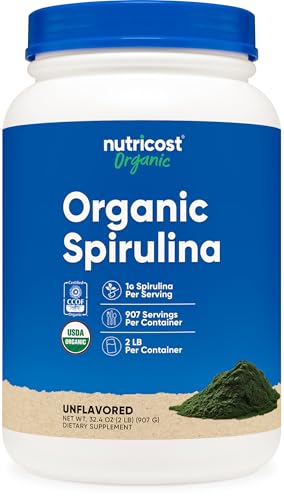
Cost per serving: $ | 907 servings | 1 g per scoop
A 2-pound tub of organic spirulina at the lowest cost per gram in this guide.
Quick Stats
- Active ingredient + form: Organic spirulina powder (whole plant)
- Dose per serving: 1 g (1 scoop)
- Dose vs. research: Below the 3 g suggested on most labels per scoop; 3 scoops give 3 g
- Third-party tested: The brand says it is third-party tested but does not name the lab
- Certifications: USDA Organic (CCOF); made in a GMP-compliant facility (brand claim)
- Who should skip: People with an autoimmune condition or phenylketonuria (PKU)
What We Like
The cost per gram is the lowest here, the label lists only organic spirulina, and the authorized seller ships it directly. The small scoop makes it easy to start low.
Watch Out For
You need three scoops for a typical 3 g serving. Some buyers find it hard to dissolve in cold drinks without a blender.
What Buyers Report
Buyers frequently mention an intense green color, good value and better digestion.
The most common complaints are a strong taste and smell, and nausea for some.
Bottom Line: The lowest-cost organic spirulina, if you do not mind measuring three scoops.
6. Sunlit Best Organic Spirulina Tablets – Small Tablets
Our rating: 4.3/5
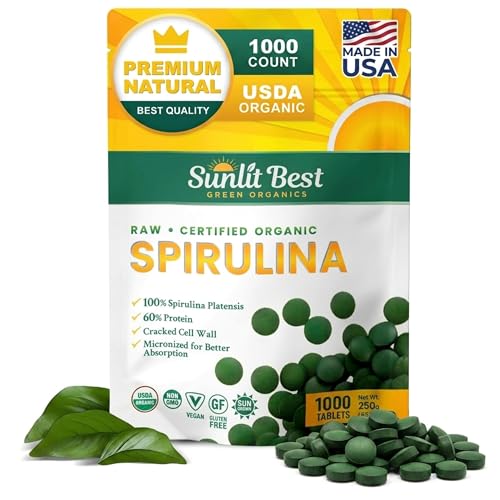
Cost per serving: $$$ | about 83 servings | 12 tablets per serving
1,000 small 250 mg tablets of organic spirulina.
Quick Stats
- Active ingredient + form: Organic spirulina tablets, 250 mg each
- Dose per serving: 3 g (12 tablets)
- Dose vs. research: Matches the 3 g a day suggested on most labels
- Third-party tested: The brand says every batch is independently third-party tested for purity and contaminants but does not name the lab
- Certifications: USDA Organic
- Who should skip: People with an autoimmune condition or phenylketonuria (PKU)
What We Like
The tablets are small, which makes them easy to swallow, and the label lists only spirulina with no binders.
Watch Out For
A full 3 g serving takes 12 tablets, and the cost per gram is high. A few buyers report stomach burning.
What Buyers Report
Buyers frequently mention good quality, easy swallowing and more energy.
A few report stomach discomfort.
Bottom Line: Small, clean tablets, but you need a lot of them.
7. Nutrex Hawaii Pure Hawaiian Spirulina – Best Hawaiian-Grown
Our rating: 4.2/5

Cost per serving: $$$ | about 66 servings | 6 tablets per serving
Spirulina grown in Kona, Hawaii, from a long-running brand with a very large following.
Quick Stats
- Active ingredient + form: Hawaiian spirulina tablets, 500 mg each
- Dose per serving: 3 g (6 tablets)
- Dose vs. research: Matches the 3 g a day suggested on most labels
- Third-party tested: Not stated for this product; the brand cites its own lead study of other powders
- Certifications: Not organic
- Who should skip: People with an autoimmune condition or phenylketonuria (PKU)
What We Like
It is grown in Hawaii using lava-filtered aquifer water, according to the brand, and it has the largest buyer base of any spirulina we found. The brand sells the listing directly.
Watch Out For
It is not organic and costs much more per gram than the powders. The listing does not describe batch testing for this product.
What Buyers Report
Buyers frequently mention good quality, steady energy and easy-to-swallow tablets.
A smaller group reports stomach aches or headaches.
Bottom Line: A trusted US-grown spirulina, at a premium.
8. Earthrise California Spirulina Tablets – California-Grown
Our rating: 4.1/5
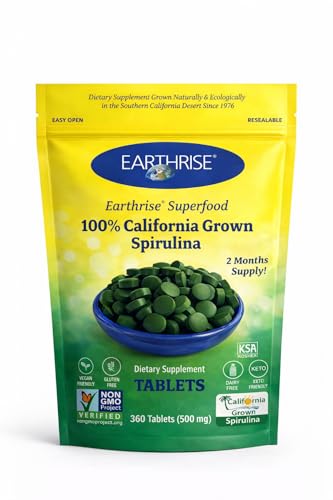
Cost per serving: $$$ | about 60 servings | 6 tablets per serving
Spirulina grown in California’s desert since the 1970s.
Quick Stats
- Active ingredient + form: Spirulina tablets, 500 mg each
- Dose per serving: 3 g (6 tablets)
- Dose vs. research: Matches the 3 g a day suggested on most labels
- Third-party tested: Not stated as third-party; the brand says every batch goes through more than 100 daily in-house tests under ISO 9001 and FSSC 22000 systems
- Certifications: Not organic
- Who should skip: People with an autoimmune condition or phenylketonuria (PKU)
What We Like
It is US-grown, and the brand describes its quality systems in detail. Buyers often mention no fishy taste.
Watch Out For
It has the highest cost per gram here and a small review base. The tablets contain vegetable stearate and silica, and some buyers find them large.
What Buyers Report
Buyers frequently mention good quality and convenience.
The main complaints are large tablets and plastic packaging.
Bottom Line: A US-grown option with detailed quality systems, at the highest price.
Products We Left Out
- Kate Naturals Organic Spirulina Powder: A popular low-cost powder, but the listing says spirulina “naturally has small traces of lead,” gives no testing details, and many buyers raise concerns about lead.
- Vimergy Spirulina Capsules: A good brand, but the cost per gram is much higher than the products above.
- NOW and Carlyle Spirulina: Left out under our brand rules.
- Spirulina and chlorella blends: They add another ingredient, so they are outside this single-ingredient guide.
- Blue spirulina (phycocyanin extract): A color extract, not whole spirulina.
Ingredient Breakdown
What Spirulina Contains
Brands describe spirulina as about 60% protein by weight, and it contains iron, beta carotene and phycocyanin. It is often called a superfood, but a 3 g serving is a small amount of food, so it adds modest nutrition.
Powder vs. Tablets
Powder costs less per gram and mixes into smoothies, but it has a strong seaweed taste. Tablets avoid the taste and are easy to take, but cost more and you may need 6 to 12 a day.
What the Research Shows
- Cholesterol: A 2023 meta-analysis of 20 trials with 1,076 people found that spirulina lowered LDL cholesterol, total cholesterol and triglycerides and raised HDL cholesterol.
- Blood pressure: A 2025 meta-analysis found that spirulina lowered systolic blood pressure by about 4.4 mmHg and diastolic by about 2.8 mmHg, with larger effects in people with high blood pressure.
- Safety review: In a USP safety evaluation, spirulina received a Class A safety rating, allowing USP quality standards for it.
How to Take Spirulina
- Dose: Most labels suggest about 3 g a day. Start lower if you are new to it.
- With food: Mix powder into a smoothie or juice, or take tablets with water and a meal.
- Store it well: Keep it cool and dry, and close the container tightly.
- Give it time: Studies on cholesterol and blood pressure usually lasted several weeks.
Safety, Side Effects & Interactions
- Contamination: Spirulina can be contaminated with toxins from other algae or with heavy metals if it is grown without good controls. A study of 18 algae supplements found cyanotoxins above tolerable levels in 8. Choose brands that describe testing.
- Side effects: Few side effects are reported at usual doses. Buyers most often mention nausea, an upset stomach or a strong taste.
- Autoimmune conditions and PKU: Harvard Health notes that spirulina may worsen autoimmune symptoms and should be avoided by people with phenylketonuria.
- Medicines: Spirulina may affect blood clotting and could interact with medicines, so tell your doctor if you take it, especially with blood thinners or immune-suppressing drugs.
Who Should Avoid It
- People with an autoimmune condition, unless their doctor approves
- People with phenylketonuria (PKU)
- People taking blood thinners or immune-suppressing medicines, unless their doctor approves
- Pregnant or breastfeeding women, unless their doctor approves
- Children, unless a doctor recommends it
How to Choose a Spirulina Supplement
Testing First
Because contamination is the main risk, look for a brand that names what it tests for, such as microcystins and heavy metals, or uses a USP-verified ingredient.
Dose
Look for about 3 g per day and check how many tablets or scoops that takes.
Organic and Origin
Organic certification covers how spirulina is farmed; it is not a heavy metal test. Some buyers prefer US-grown spirulina from Hawaii or California.
Other Ingredients
The best products list only spirulina. Some tablets add binders such as stearate or silica.
Cost per Gram
Products in this guide cost about 3 to 18 cents per gram.
Red Flags on the Label
- No mention of testing for heavy metals or algae toxins
- Claims that spirulina detoxes the body or cures disease
- Blends that hide the amount of spirulina
- Unknown third-party sellers on the listing
Important: These supplements are not intended to diagnose, treat, cure, or prevent any disease. Results vary by individual. If you have a health condition or take medications, check with your doctor before adding any new supplement to your routine.
FAQ
Which spirulina supplement is best?
In our comparison, Triquetra Organic Spirulina Powder ranked first because it uses a USP-verified ingredient and the brand describes testing for microcystins and heavy metals.
How much spirulina should I take a day?
Most labels suggest about 3 g a day, which is 6 tablets of 500 mg or about one teaspoon of powder.
Does spirulina lower cholesterol?
In a 2023 meta-analysis of 20 trials, spirulina lowered LDL cholesterol and triglycerides and raised HDL. It is not a replacement for prescribed treatment.
Is spirulina safe?
Spirulina received a Class A safety rating from USP, but products can be contaminated if not tested. Choose a tested brand and avoid it if you have an autoimmune condition or PKU.
Are spirulina tablets as good as powder?
Yes, the spirulina is the same. Tablets avoid the taste but cost more per gram.
What is blue spirulina?
Blue spirulina is phycocyanin, a pigment extracted from spirulina. It is used as a color and does not contain the other nutrients in whole spirulina.
Our Take
Triquetra Organic Spirulina Powder is our top pick among spirulina supplements because it uses a USP-verified ingredient and names the toxins it tests for. Nutricost is the best value per gram, and Micro Ingredients is our tablet pick.
Choose Zazzee or BulkSupplements for low-cost organic powder, Sunlit Best for small tablets, or Nutrex Hawaii and Earthrise for US-grown spirulina. For other options aimed at cholesterol, see our red yeast rice supplements guide, and for another green powder, see our moringa supplements guide. If you are comparing algae, see our chlorella supplements guide.
Practical tip: if the taste puts you off, start with tablets or mix a small amount of powder into a fruit smoothie.
Sources
- The effect of Spirulina supplementation on lipid profile: GRADE-assessed systematic review and dose-response meta-analysis of data from randomized controlled trials (2023) — PubMed
- The Effect of Spirulina Supplementation on Blood Pressure in Adults: A GRADE-Assessed Systematic Review and Meta-Analysis of Randomized Clinical Trials (2025) — PubMed
- United States pharmacopeia safety evaluation of spirulina (2011) — PubMed
- Detection of Cyanotoxins in Algae Dietary Supplements (2017) — PubMed
- By the way, doctor: Is spirulina good for you? — Harvard Health Publishing
Labels, sellers and cost tiers last checked: November 17, 2026.
Update log
- November 17, 2026: Added a link to our chlorella supplements guide. No product or ranking changes.
- November 17, 2026: First published. 8 products compared.


